The client
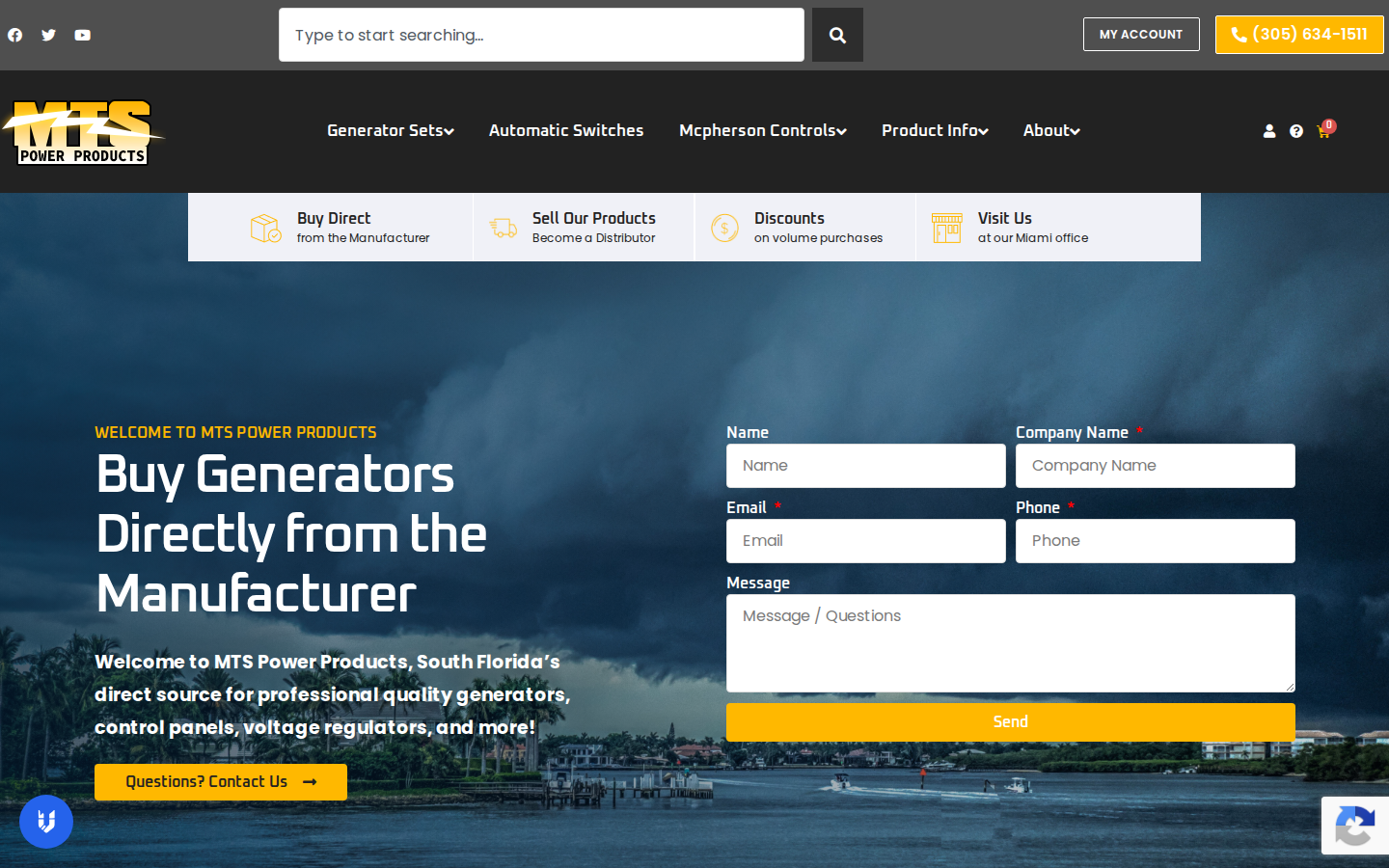
MTS Power Products sells generator sets, automatic transfer switches, voltage regulators, governors and replacement parts from Miami, direct from the manufacturer and through distributors nationwide. UltraWeb Labs built and hosts the site and has run its SEO for several years.
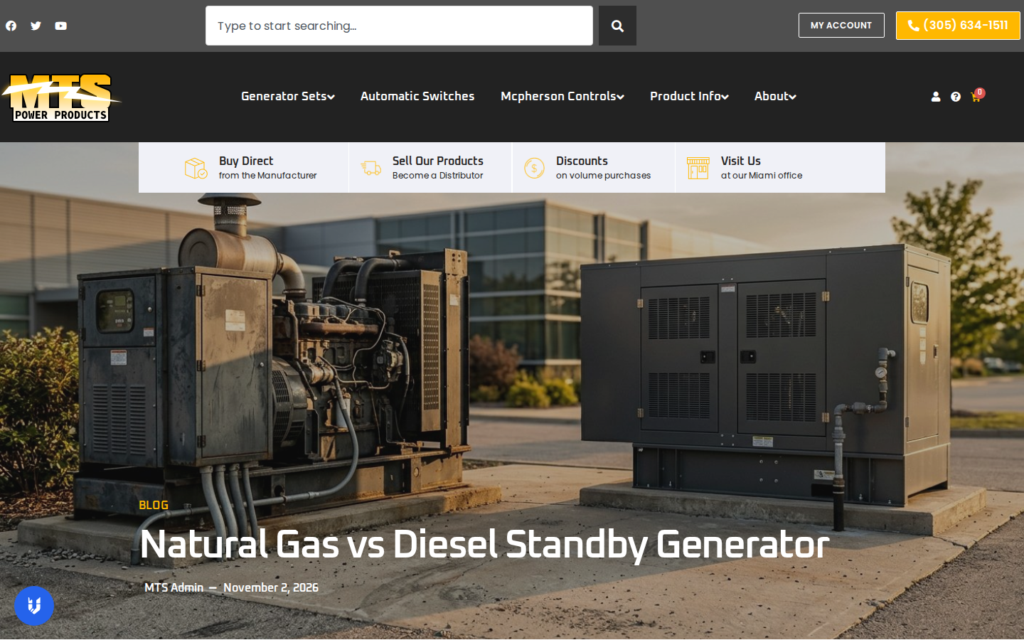
Their real edge is expertise. The staff answer the same hard questions all day: which carbon brush fits which regulator, how to wire a transfer switch, whether a natural gas or diesel standby unit makes sense for a given building. Almost none of that knowledge was reaching the website.
The challenge
Standard AI content starts from keyword research and produces articles anyone could publish. For a technical supplier that is worse than nothing:
- It dilutes the brand. A generic "what is a transfer switch" post reads like every other one on the internet.
- It risks being wrong. A hallucinated spec on a part number is a returned order and a lost customer.
- It tells Google nothing new. Pages that repeat what a thousand sites already say do not earn rankings or citations in AI answers.
- Nobody has time to write. The people who know the answers are on the phone and at the counter.
MTS needed articles only MTS could write, without pulling anyone off the floor to write them, and without a reviewer reading every draft line by line.
What we built
-
Capture: four sources, nothing typed twice
Every week the engine mines the on-site assistant's chat transcripts, the WooCommerce product catalog, the site's knowledge base and the emails the team forwards to a dedicated content address. Each raw item becomes an insight card: the question a real customer asked and the answer the staff gave.
-
Curate: scrub, dedupe, gate, score
Cards are stripped of customer details, checked against everything already published on the site and in the pipeline so the same story is never told twice, screened against the brand's banned claims and competitor names, and scored on search demand and sales fit. Each surviving topic carries its provenance: first-hand knowledge, or a blend of first-hand and search data.
-
Approve: one click, in the Topics tab or by email
Proposed topics land in a Topics tab with Approve and Reject buttons and in a weekly digest email. First-hand topics skip the queue and publish first. Nothing is written until a person says yes.
-
Create: a brief built from the evidence
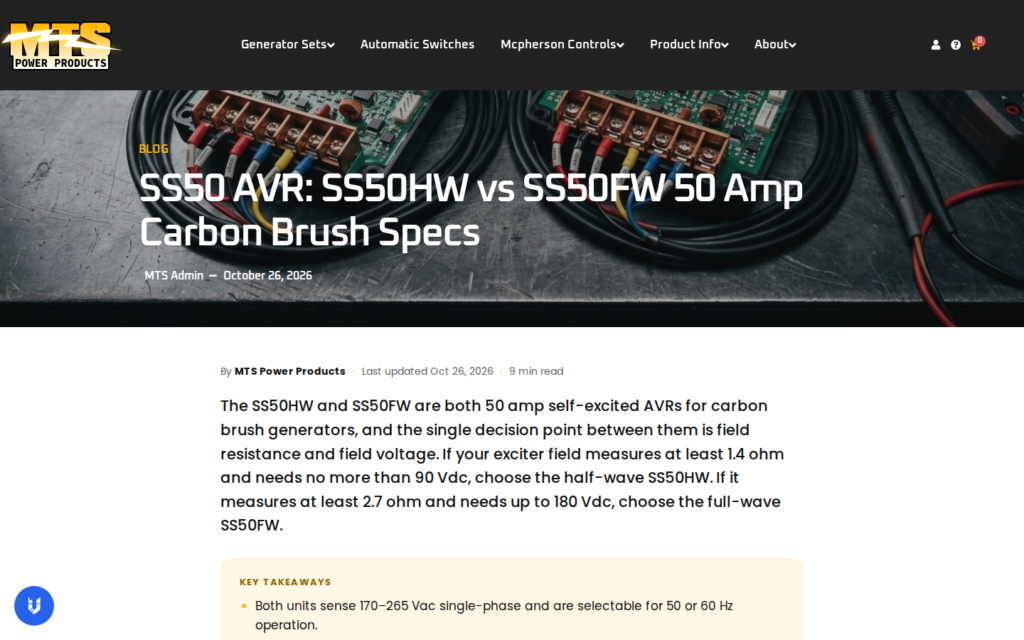
The writer receives the actual evidence behind the topic, the brand guidelines and the reviewer's notes, so the article says what the parts counter would say and cites the specs the catalog holds. Schema markup, bylines, captions, internal links and brand styling are applied automatically. A banned-pattern gate blocks the draft if it drifts.
-
Loop: publish Monday, learn from the questions
One article publishes every Monday morning. Questions the on-site assistant could not answer are screened for relevance and fed back as new topics, so the content follows what customers are actually asking this month.
-
The knowledge base works both ways
The same plugin powers an on-site assistant that answers customers from MTS's own documents. The team uploads a manual or a plain-language guide, in English or Spanish, and the assistant can quote it the same day. The first guides went in within weeks of launch.
Results
- 1 / week article published unattended since the October 2026 pilot every Monday, 9:15 am
- 12 first-hand topics queued from real customer questions plus 39 blended topics, as of Nov 7, 2026
- 25 articles live, written from product data and support knowledge including transfer-switch wiring and brush-spec guides
- 0 hrs of staff time spent writing approval takes one click
Pilot numbers are from our content platform as of November 7, 2026. The traffic line above is the site's own Google Search Console data for the SEO program that preceded the pilot; we will add the pilot's own clicks once the articles have 90 days on record.
“Content as a system, not a deliverable. The business keeps answering customers the way it always has, and the engine turns those answers into pages a competitor with a keyword tool cannot copy.”
A closer look
What's next
Next is handing topic approval to the client's own product lead, adding Search Console results per article to the monthly report, and rolling the same engine out to other product-led clients. The capture, curate, create, loop model is the template.