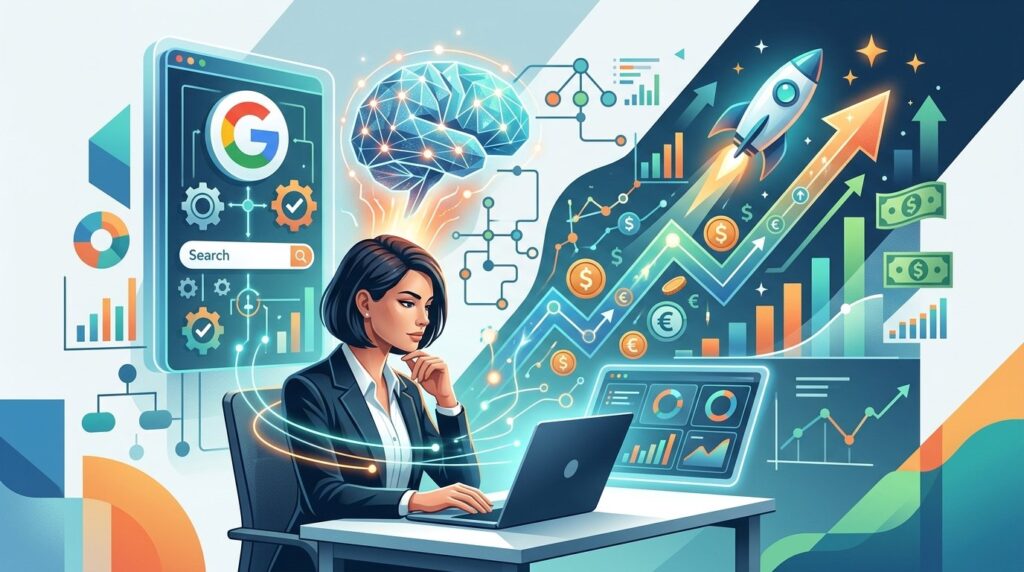
What if your Google Ads campaigns could think, adapt, and optimize themselves — without you having to babysit them every day? That’s not a distant fantasy. In 2026, agentic reasoning is changing the way small businesses approach pay per click advertising, and the results are hard to ignore.
If you’re a business owner in Boca Raton, West Palm Beach, Fort Lauderdale, or Miami, you’re likely spending real money on Google Ads and wondering whether you’re getting everything possible out of that investment. This guide breaks down what agentic reasoning actually means, how it applies to Google Ads management, and what practical steps you can take to improve your ROI starting today.
What Is Agentic Reasoning — In Plain English?
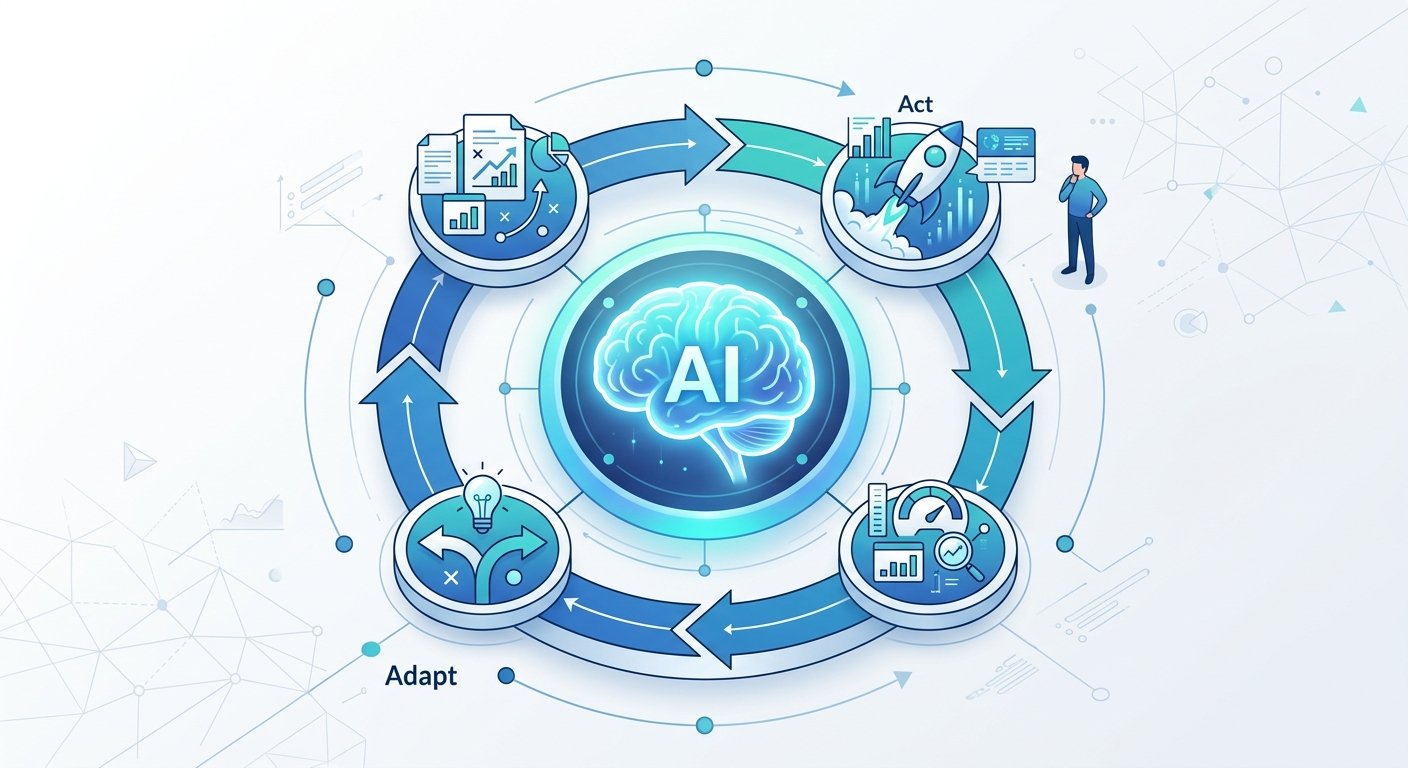
Agentic reasoning refers to the ability of AI systems to pursue goals autonomously — planning multi-step actions, evaluating outcomes, adjusting strategy, and taking initiative without constant human prompting. Unlike traditional automation (which follows fixed rules), autonomous AI using agentic reasoning can identify patterns, make decisions, and course-correct in real time.
Think of it this way: traditional Google Ads automation is like a thermostat — it does what you set it to do. Agentic AI is more like a smart home system that learns your preferences, anticipates your needs, and proactively adjusts before you even realize something needs changing.
For small businesses running search advertising services and eCommerce campaigns, this distinction matters enormously. Every dollar counts, and agentic systems can help stretch your budget further than manual management alone ever could.
How Agentic Reasoning Changes Google Ads Management
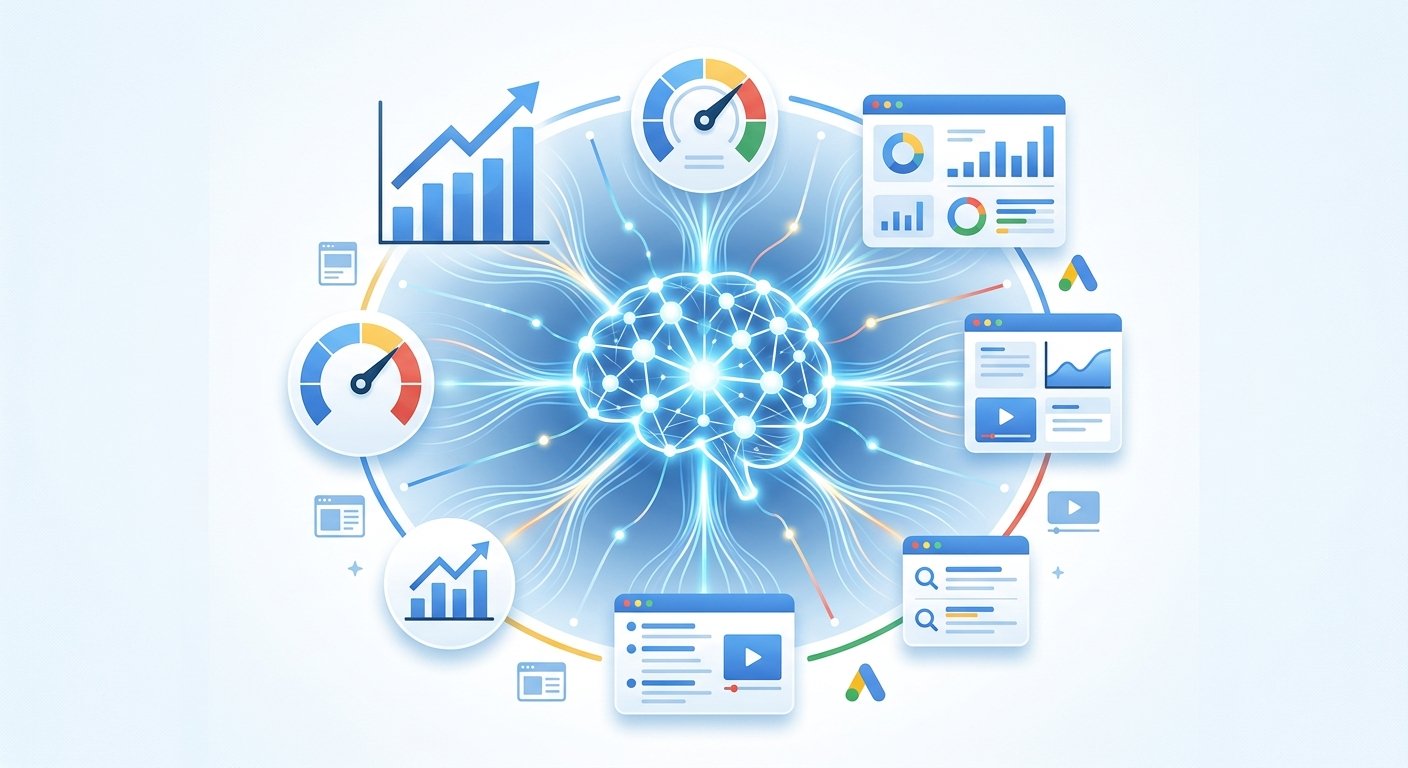
Google’s own ecosystem has been quietly evolving in this direction. Tools like Performance Max campaigns and Smart Bidding already use machine learning to optimize bids and placements. But agentic reasoning takes this further by connecting those insights to broader campaign goals — budget pacing, audience segmentation, creative testing, and competitive response — all operating together as a coordinated system.
Here’s where it gets practical for your business:
- Real-time bid optimization: AI agents can adjust bids based on time of day, device type, user intent signals, and conversion likelihood — simultaneously and continuously.
- Audience expansion and refinement: Agentic systems can identify high-converting audience segments you may not have considered, then allocate budget accordingly.
- Ad copy iteration: Instead of waiting for a monthly review, AI agents can test variations and shift spend toward top performers in near real time.
- Budget reallocation: When one campaign is underperforming, agentic tools can identify it early and shift resources to what’s working — before you’ve wasted a significant portion of your monthly spend.
According to Google’s own AI Ads announcements, campaign automation driven by AI consistently improves conversion rates for advertisers who pair it with strong creative assets and clear goal-setting. The key phrase there: “pair it with.” Agentic AI is a powerful tool, not a replacement for strategy.
The Human-in-the-Loop Still Matters
Here’s something many vendors won’t tell you: agentic reasoning works best when guided by a knowledgeable human. A skilled Google Ads consultant doesn’t become obsolete — they become more valuable. Their role shifts from routine bid adjustments to strategic oversight, creative direction, and goal alignment.
This is especially important for small businesses. Without proper guardrails, autonomous AI can optimize for the wrong metric. For example, an AI agent might maximize clicks while ignoring conversion quality — bringing in traffic that doesn’t convert into actual customers. A good Google Ads specialist ensures the AI is chasing the right goals.
At UltraWeb Labs, our South Florida digital marketing team takes this hybrid approach seriously. We configure AI-powered tools within your Google Ads account to pursue the outcomes that actually grow your business — whether that’s phone calls, form submissions, online purchases, or in-store visits — while maintaining hands-on oversight to catch anything the algorithms miss.
Practical Steps to Apply Agentic Reasoning to Your Campaigns
1. Set Clear, Measurable Conversion Goals
Agentic systems optimize toward what you tell them to value. Before enabling any form of automated bidding or AI-assisted management, define your primary conversion actions. Is it a product purchase? A contact form fill? A phone call? Google’s Smart Bidding and AI agents are only as effective as the targets you give them.
2. Feed the System Quality Data
AI agents learn from historical data. If your Google Ads account is relatively new or has sparse conversion tracking, agentic tools won’t have enough signal to work effectively. Prioritize proper conversion tracking setup through Google Tag Manager and ensure your tracking covers all meaningful actions on your website. This is foundational — and something our Google Ads management team addresses before touching anything else.
3. Use Audience Signals Intelligently
Provide AI agents with rich audience signals: customer match lists, website visitor segments, and engagement data from your CRM if available. The more context an agentic system has, the smarter its decisions. For eCommerce businesses, this includes product feed quality — well-structured feeds dramatically improve AI performance in Shopping campaigns. Our eCommerce growth services include this feed optimization as a core component.
4. Don’t Neglect Your Landing Pages
Even the most sophisticated agentic system can’t fix a bad landing page. If your ad click leads to a slow, confusing, or unconvincing page, the conversion won’t happen — and the AI will waste budget chasing a dead end. Strong web design is the silent partner behind every successful PPC campaign. According to research from the Nielsen Norman Group, users form an opinion about a web page in under 50 milliseconds — meaning your landing page has almost no time to make a first impression.
5. Review, Don’t Micromanage
One of the biggest mistakes business owners make with AI-assisted PPC management services is either ignoring the data entirely or overriding every automated decision. The right approach is regular strategic review — weekly at minimum — where you assess performance trends, adjust creative assets, and recalibrate goals. Let the agents handle the tactical execution; you stay focused on the business strategy.
What This Means for Your ROI
The bottom line is this: businesses that combine agentic AI tools with expert human oversight in their Google Ads campaigns consistently outperform those relying on either approach alone. Manual management can’t process the volume of real-time signals that modern search advertising requires. But pure automation without strategic direction tends to drift toward vanity metrics.
For South Florida businesses competing in high-density markets like Miami and Fort Lauderdale, this combination is increasingly the standard, not the exception. If your competitors are already leveraging agentic reasoning in their PPC management services and you’re still adjusting bids manually once a week, you’re operating at a structural disadvantage.
The good news? Catching up doesn’t require a massive budget overhaul. It requires the right setup, the right goals, and the right team guiding the process.
Frequently Asked Questions
What is agentic reasoning in the context of Google Ads?
Agentic reasoning refers to AI systems that can autonomously plan, execute, and adjust multi-step strategies to achieve a defined goal. In Google Ads, this means AI agents that continuously optimize bids, audiences, budgets, and ad performance in real time — going beyond simple rule-based automation to make intelligent, context-aware decisions.
Do I need a large budget to benefit from AI-driven Google Ads management?
No. While larger budgets provide more data for AI agents to learn from, small and medium-sized businesses can still benefit significantly. The key is having clean conversion tracking, well-defined goals, and a knowledgeable Google Ads specialist overseeing the account to ensure the AI is optimizing for the right outcomes.
How is agentic AI different from Google’s Smart Bidding?
Smart Bidding is a specific automated bidding strategy within Google Ads. Agentic AI is a broader concept — it encompasses tools and systems that can manage multiple aspects of a campaign simultaneously, including audience strategy, creative testing, budget pacing, and competitive response, all working together toward a unified goal.
Can agentic AI completely replace a Google Ads consultant?
Not effectively. Agentic AI handles tactical execution exceptionally well, but it requires strategic direction from a human expert. A Google Ads consultant defines the goals, sets guardrails, interprets performance data in business context, and makes creative decisions that AI systems cannot replicate on their own.
How do I know if my current Google Ads campaigns are ready for AI-assisted management?
Start by auditing your conversion tracking. If you’re not accurately tracking what happens after someone clicks your ad, no AI system can optimize effectively. Once tracking is solid and you have at least 30–50 conversions per month per campaign, you’re in a strong position to layer in agentic tools and see meaningful improvements.
Ready to Get More From Your Google Ads?
If you’re running pay per click advertising in South Florida and feel like you’re not getting the results your budget deserves, you don’t have to figure it out alone. The UltraWeb Labs team in Boca Raton brings personalized service, proven results in eCommerce growth and lead generation, and hands-on expertise in AI-assisted Google Ads management — without the corporate runaround.
We work directly with business owners in Boca Raton, West Palm Beach, Fort Lauderdale, and Miami to build campaigns that are both smart and strategic. Call us at (561) 948-0442 or explore our Google Ads services to start a conversation about what better ROI actually looks like for your business.