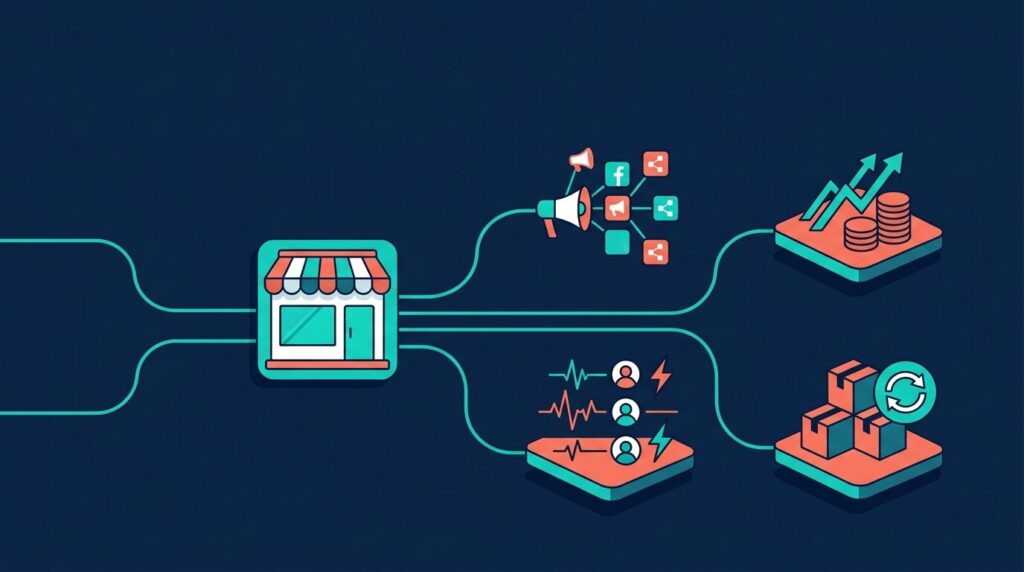
What if your eCommerce store could run marketing campaigns, respond to customer behavior, restock ad budgets, and post on social media — all without you lifting a finger? That’s not science fiction in 2026. It’s called agentic automation, and small business owners across South Florida are starting to use it to compete with brands ten times their size.
This guide breaks down exactly what agentic workflows are, how they apply to eCommerce marketing, and how you can start using them to save time and drive more sales — without needing a computer science degree.
What Are Agentic Workflows?
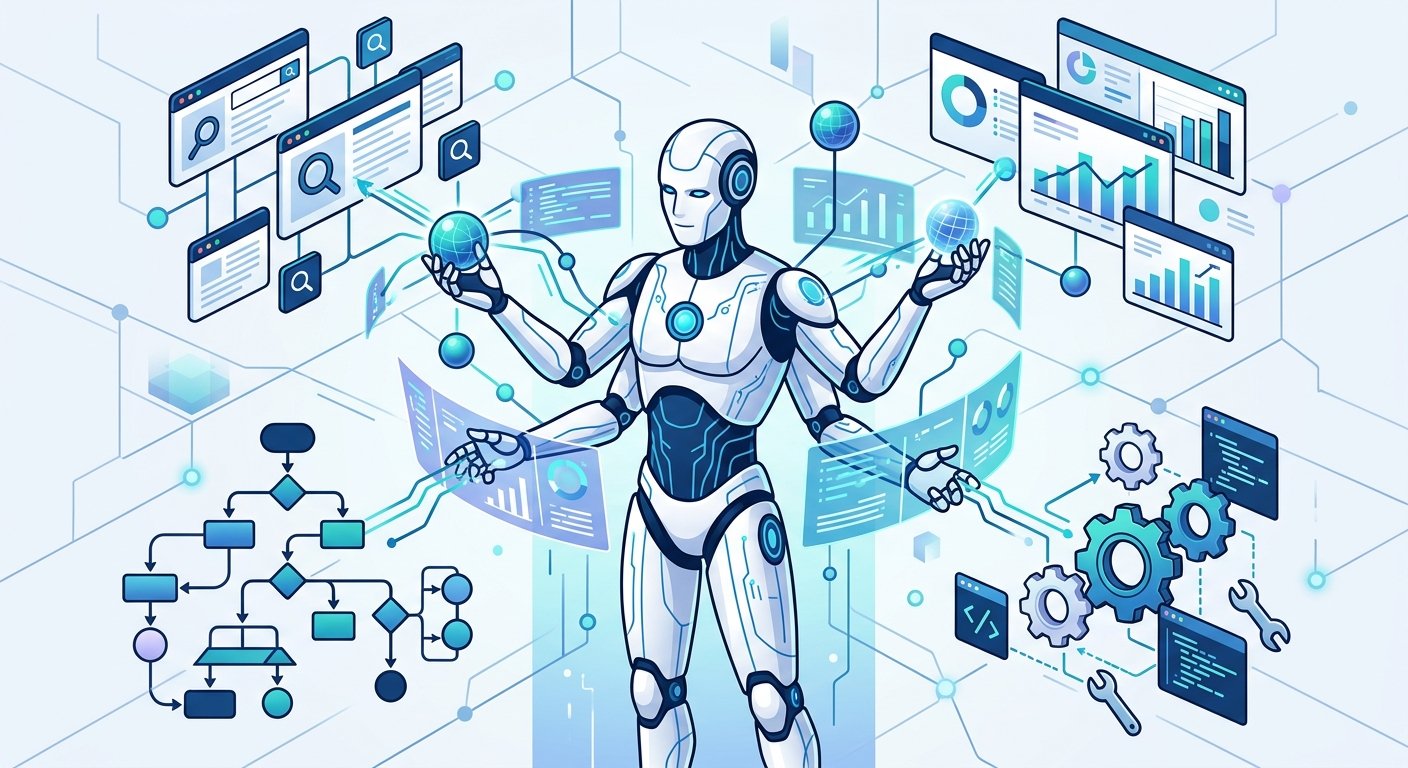
An agentic workflow is a system where AI agents take actions autonomously — meaning they don’t just generate content or answer questions, they actually do things. They browse the web, pull data, make decisions, trigger other tools, and adjust strategies based on real-time results.
Unlike traditional automation (which follows a fixed script), autonomous AI uses context and goals to figure out the best next step. Think of it like hiring a very fast, always-on marketing assistant who never needs a day off.
For eCommerce businesses, this is a game-changer. According to McKinsey’s research on AI’s economic potential, marketing and sales functions stand to benefit most from AI-driven automation — and eCommerce sits right at that intersection.
Why This Matters for Small eCommerce Businesses

If you’re running an online store, you’re probably already stretched thin. You’re managing inventory, handling customer service, fulfilling orders, and somehow trying to market your products at the same time. Traditional marketing requires constant input — writing emails, scheduling ads, updating product descriptions, tracking analytics.
Agentic automation changes that equation. Instead of you managing every moving part, AI agents handle the repetitive, data-heavy work. You set the goals. They figure out how to hit them.
Here’s where this gets practical for eCommerce owners specifically:
- Dynamic ad management: AI agents monitor your Google Ads performance and adjust bids, pause underperforming ads, and shift budget toward what’s converting — all in real time.
- Personalized email sequences: Instead of one-size-fits-all campaigns, agents send personalized follow-ups based on individual customer behavior like cart abandonment, purchase history, or time since last visit.
- Social media management: Agents can draft, schedule, and even respond to comments across platforms based on brand guidelines you define once.
- Product listing optimization: Agents analyze search trends and automatically update product titles, descriptions, and tags to improve visibility.
The result? More consistent marketing with less manual effort — and better data driving every decision.
How Agentic Workflows Actually Work in eCommerce
Step 1: Define Your Goals and Guardrails
Before any AI agent can work on your behalf, you need to tell it what success looks like. This might be “increase return on ad spend to 4x” or “maintain a 30% email open rate.” You also set boundaries — budget caps, brand voice rules, which products to prioritize.
This is critical. Agentic automation doesn’t replace your strategy. It executes it faster and at scale.
Step 2: Connect Your Tools and Data Sources
AI agents need access to your systems to take action. For eCommerce, that typically means connecting your store platform (like Shopify), your ad accounts, your email platform, your analytics, and your CRM.
If you’re working with a Shopify developer or eCommerce growth partner, this integration stage is where their technical expertise becomes invaluable. Getting the data pipelines right from the start saves enormous headaches later.
Step 3: Let Agents Run — Then Review the Outcomes
Once live, AI agents monitor performance continuously. They’re not waiting for your weekly check-in — they’re adjusting in real time. A good agentic setup surfaces reports and flags exceptions for your review, so you stay in control of the big decisions while automation handles the day-to-day execution.
Real-World Applications for eCommerce Marketers
Google Ads Management on Autopilot
Manual Google Ads management is time-consuming and unforgiving. Miss a bid adjustment or let a poorly performing keyword run too long, and you’ve wasted budget. AI agents built for Google Ads management can monitor campaign performance around the clock, optimize bids based on conversion data, and test new ad variations automatically.
This doesn’t mean you’re handing over the keys completely. You still define target costs per acquisition and approve major strategy changes. But the daily optimization work — the stuff that used to eat hours — runs itself.
Smarter Social Media Management
Consistent social media presence is exhausting to maintain manually. Agentic workflows can analyze which content formats drive the most engagement for your audience, generate on-brand post drafts for your review, schedule content at peak times, and monitor comments for customer service opportunities.
For South Florida eCommerce brands selling seasonally or running flash promotions, this kind of responsive, always-on social media management keeps you relevant without requiring constant attention.
Automated Customer Journey Optimization
One of the most powerful uses of agentic workflows is personalizing the customer journey at scale. An AI agent can detect when a customer browses a product category multiple times without purchasing, then automatically trigger a targeted discount email, a retargeting ad, and a personalized product recommendation — all coordinated across channels, all happening within minutes of the browsing session.
According to Salesforce research on customer expectations, 73% of customers expect companies to understand their unique needs. Agentic automation is finally making that level of personalization achievable for small businesses, not just enterprise brands.
What You Need to Get Started
You don’t need a tech team to implement agentic workflows, but you do need the right foundation. Here’s what matters most:
- A solid eCommerce platform: Shopify remains the most agent-friendly platform thanks to its robust API ecosystem. If your store isn’t built for integrations, it’s worth investing in proper eCommerce website development before layering on automation.
- Clean data: Agents are only as smart as the data they work with. Messy product catalogs, duplicate customer records, or broken tracking will produce bad automation. Start with a data audit.
- Clear brand guidelines: AI agents executing your social media or email marketing need to know your voice, your non-negotiables, and your approval workflows.
- A trusted marketing partner: Most small business owners benefit from working with a digital marketing team that understands both the technical setup and the strategy. Agentic tools are powerful, but they need a knowledgeable hand guiding the configuration.
Common Mistakes to Avoid
Agentic automation is exciting, but there are pitfalls that trip up businesses new to it:
- Setting it and completely forgetting it: Autonomous AI still needs human oversight. Review performance weekly and audit agent decisions regularly.
- Automating broken processes: If your checkout flow has issues or your product pages lack strong copy, automation will scale those problems. Fix fundamentals first — including investing in strong web design and clear conversion paths.
- Ignoring compliance: AI agents sending emails or running ads must comply with CAN-SPAM, GDPR, and platform advertising policies. The FTC provides clear guidelines on digital marketing compliance that apply to automated campaigns as much as manual ones.
- Skipping the strategy layer: Automation executes strategy. It doesn’t create it. Know your customer acquisition goals, margins, and competitive positioning before letting agents loose.
How UltraWeb Labs Can Help
At UltraWeb Labs, we work with eCommerce businesses across Boca Raton, West Palm Beach, Fort Lauderdale, and Miami to build marketing systems that scale. That includes helping business owners understand which agentic tools make sense for their specific store, how to integrate them with existing platforms, and how to keep human judgment in the loop where it matters most.
We’re not here to hand you a complicated tech stack and disappear. Our team provides the kind of personalized attention that helps you actually use these tools to grow — whether that means hands-on Google Ads management, social media management support, or full eCommerce strategy and SEO through our SEO and AEO services.
Frequently Asked Questions
What is the difference between regular automation and agentic automation?
Traditional automation follows fixed rules — if X happens, do Y. Agentic automation uses AI agents that can set their own sub-goals, adapt to new information, and take multi-step actions to reach an outcome. It’s much more flexible and capable of handling complex, variable marketing tasks.
Do I need technical skills to use agentic workflows for my eCommerce store?
Not necessarily. Many agentic marketing tools are designed for non-technical users, but getting them set up correctly and integrated with your eCommerce platform often benefits from professional guidance. The setup investment pays off significantly in time saved over the long term.
Will agentic AI replace my marketing team or agency?
No. Agentic AI handles execution and optimization at scale, but it still needs human strategy, creative direction, and oversight. Think of it as a powerful tool that makes your marketing team or agency more effective — not a replacement for human judgment and relationship-building.
How much does implementing agentic workflows cost for a small eCommerce business?
Costs vary widely depending on the tools and level of integration. Many platforms offer affordable entry points, and the ROI typically comes from reduced ad waste, higher conversion rates, and time savings. A good starting point is to audit your current marketing spend and identify the highest-friction manual tasks that automation could address first.
Is agentic automation safe for my brand?
When set up with clear guardrails, brand guidelines, and human review processes, yes. The key is defining what agents can and cannot do without approval. Routine tasks like bid adjustments and email scheduling can run autonomously, while major campaign changes or public-facing responses should route through your team for review.
Ready to make your eCommerce marketing work harder without burning yourself out? The team at UltraWeb Labs helps South Florida business owners implement smart, scalable marketing systems that drive real results. Call us at (561) 948-0442 or visit our eCommerce services page to start a conversation about what’s possible for your store.