South Florida’s business landscape is one of the most competitive in the country. With over 6.2 million residents across Miami-Dade, Broward, and Palm Beach counties, the opportunity for local businesses is massive—but so is the competition. The difference between thriving and barely surviving often comes down to one thing: whether your ideal customers can actually find you when they’re searching online.
Local SEO isn’t just another marketing buzzword. It’s the strategic process of optimizing your online presence so you show up when someone in your area searches for what you offer. When done right, it transforms your website from a digital brochure into a lead-generating machine that works 24/7.
Why Local SEO Matters More in South Florida
South Florida has unique characteristics that make local SEO absolutely essential. We’re dealing with a highly diverse, mobile-first population spread across multiple cities and neighborhoods, each with distinct demographics and search behaviors. Someone searching for “best Italian restaurant” in Boca Raton has completely different expectations than someone making the same search in Wynwood or Delray Beach.
According to recent data, 78% of local mobile searches result in an offline purchase within 24 hours. In tourist-heavy areas like Fort Lauderdale and Miami Beach, this number climbs even higher. Your potential customers are searching right now—from their phones, while they’re in your neighborhood, ready to make a decision.
The challenge? Google’s local search algorithm considers over 200 factors when deciding which businesses to show. That’s where strategic small business SEO comes into play, specifically tailored for our South Florida market.
Understanding Google Business Profile Optimization
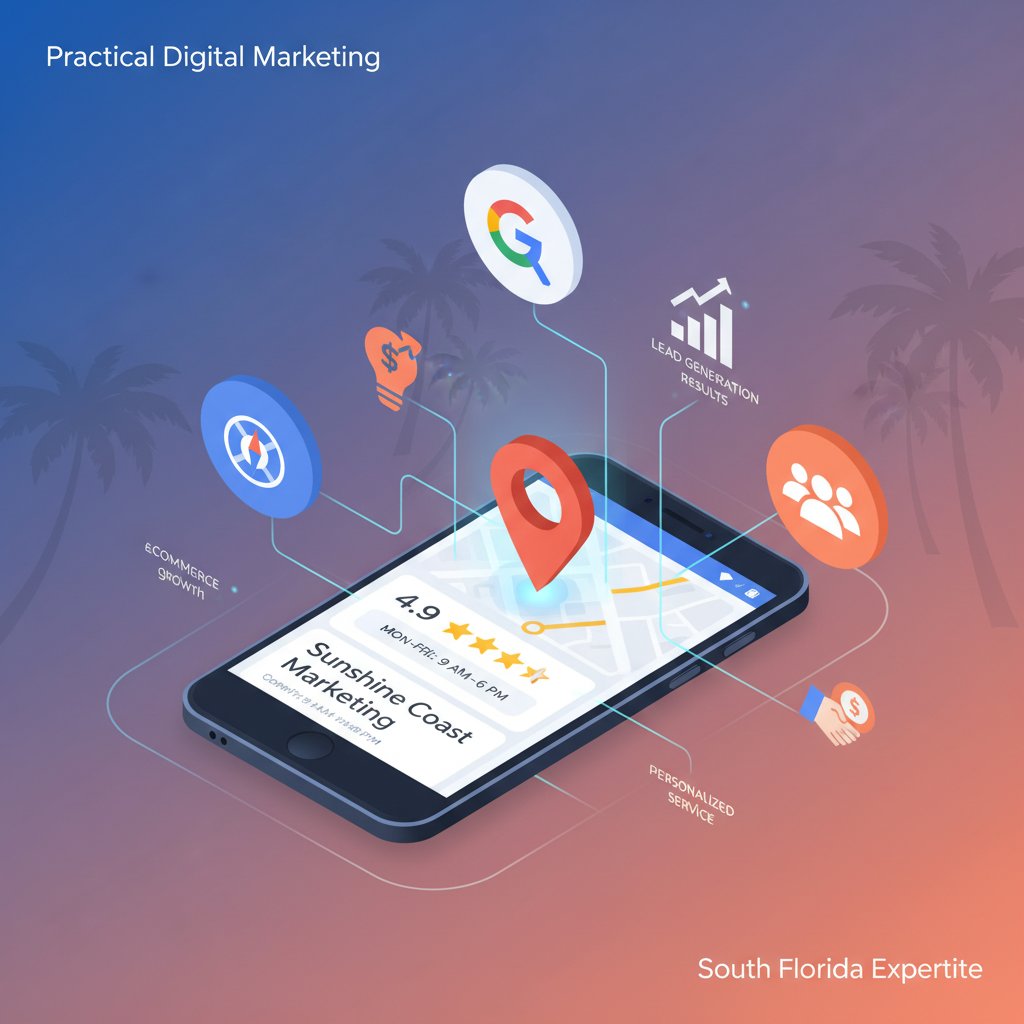
Your Google Business Profile (formerly Google My Business) is the foundation of any local SEO strategy. It’s the information box that appears when someone searches for your business or finds you on Google Maps. For South Florida businesses, this is prime real estate.
Setting Up Your Profile Correctly
Start by claiming and verifying your listing if you haven’t already. Use your exact business name as it appears on your storefront or official documents—no keyword stuffing. Choose the most specific categories available. A Boca Raton restaurant should select “Italian Restaurant” rather than just “Restaurant” if that’s what you specialize in.
Your business description should naturally mention your location and services. Instead of “We offer great food,” try “Family-owned Italian restaurant serving authentic Neapolitan pizza in downtown Boca Raton since 2015.” This tells Google—and potential customers—exactly what you do and where you do it.
The Power of Consistent Updates
Google favors active profiles. Post weekly updates about specials, events, new products, or even helpful tips related to your industry. A Coral Springs HVAC company might post about seasonal maintenance tips before summer. These posts signal that your business is active and engaged with the community.
Photos are equally important. Businesses with photos receive 42% more requests for directions and 35% more click-throughs to their websites. Upload high-quality images of your storefront, products, team, and happy customers (with permission). Update these regularly to show your business is current and thriving.
Building Citations and Local Links
Citations are online mentions of your business name, address, and phone number (NAP). Consistency across the web tells Google your business is legitimate and trustworthy. One of the most common mistakes South Florida businesses make is having different versions of their address across various platforms.
Where to List Your Business
Beyond Google, focus on these high-impact directories:
- Yelp—especially important for restaurants and service businesses
- Apple Maps—increasingly important as iPhone users rely on it
- Facebook Business—integrate with your social media presence
- Better Business Bureau—builds trust and authority
- Industry-specific directories relevant to your niche
- Local chambers of commerce websites
For South Florida specifically, consider listings on sites like Sun Sentinel’s business directory, local tourism boards, and neighborhood-specific sites like Boca Magazine’s business listings or Miami New Times.
Earning Quality Local Backlinks
Backlinks from other local websites signal authority to Google. A Boca Raton SEO company working with a local client might help them earn links through:
- Sponsoring local events or youth sports teams
- Getting featured in local news coverage
- Partnering with complementary local businesses
- Contributing expert insights to local publications
- Participating in chamber of commerce activities
One UltraWeb client, a family-owned furniture store in Delray Beach, gained significant visibility after sponsoring a local art festival. The event coverage linked back to their website from multiple local news outlets, and their Google rankings improved dramatically within weeks.
Creating Location-Specific Content
Generic content doesn’t cut it in local SEO. Your website needs to speak directly to South Florida customers with content that addresses their specific needs, concerns, and interests.
Service Area Pages That Convert
If you serve multiple South Florida cities, create dedicated pages for each location. Don’t just swap out city names in duplicate content—Google penalizes that. Each page should include:
- Specific information about services in that area
- Local landmarks or neighborhoods you serve
- Testimonials from customers in that city
- Unique photos from that location
- Local contact information or office details
Blog Content With Local Focus
Answer questions your local customers actually ask. A landscaping company might write about “Best Drought-Resistant Plants for South Florida Gardens” or “Hurricane Preparation Tips for Your Palm Beach County Yard.” This content attracts local searchers while establishing your expertise.
Think about seasonal trends specific to South Florida. Pool maintenance companies should create content before summer heat arrives. Hurricane preparedness services should ramp up content from June through November. Align your content calendar with what locals are searching for throughout the year.
Managing and Leveraging Reviews
Reviews are social proof that influences both potential customers and Google rankings. Businesses with higher ratings and more reviews consistently rank better in local search results. But review management goes beyond just asking customers to leave feedback.
Building a Review Strategy
Make it easy for happy customers to leave reviews. Send follow-up emails with direct links to your Google Business Profile. Train your team to mention reviews at the point of sale: “If you’re happy with our service today, we’d appreciate if you’d share your experience on Google.”
Timing matters. Ask for reviews when the positive experience is fresh—within 24-48 hours. Use automated email sequences, but make them feel personal and genuine. Nobody wants to receive a robotic review request.
Responding to Every Review
Whether reviews are glowing or critical, respond professionally and promptly. Thank customers for positive feedback and address any concerns raised in negative reviews. Your responses show potential customers how you handle issues—often more important than the complaints themselves.
A Miami Beach hotel client of UltraWeb turned their review strategy around by responding thoughtfully to every review within 24 hours. Within six months, their average rating increased from 3.8 to 4.6 stars, and their bookings through Google increased by 43%.
Mobile Optimization for Local Search
South Florida residents live on their phones. Whether they’re stuck in I-95 traffic or walking down Las Olas Boulevard, they’re searching for businesses on mobile devices. If your website isn’t mobile-friendly, you’re losing customers before they even know what you offer.
Google uses mobile-first indexing, meaning it primarily uses the mobile version of your site for ranking. Your mobile site needs to load quickly (under 3 seconds), display properly on all screen sizes, and make it incredibly easy for users to contact you or get directions.
Essential Mobile Features
Include click-to-call buttons prominently on mobile. When someone searches for an emergency plumber in Fort Lauderdale at 11 PM, they want to call immediately—not hunt for your phone number. Make your address clickable so it opens directly in mapping applications. Simplify forms so they’re easy to complete on a small screen.
Tracking and Measuring Local SEO Success
Effective local seo services require ongoing measurement and adjustment. You can’t improve what you don’t measure. Set up proper tracking to understand what’s working and what needs refinement.
Key Metrics to Monitor
Focus on metrics that tie directly to business results:
- Local search ranking positions for your target keywords
- Google Business Profile insights (views, clicks, calls, direction requests)
- Organic traffic from local searches in Google Analytics
- Conversion rates from local traffic
- Phone calls and form submissions attributed to organic search
- Reviews quantity and average rating trends
An SEO agency South Florida businesses trust will provide transparent reporting on these metrics, showing not just rankings but actual business impact. Rankings mean nothing if they don’t translate to phone calls, foot traffic, or online sales.
Common Local SEO Mistakes to Avoid
Even well-intentioned South Florida business owners make critical errors that undermine their local SEO efforts. Avoid these common pitfalls:
Inconsistent NAP information: Your business name, address, and phone number must match exactly across every online platform. Even small variations confuse Google and hurt your rankings.
Ignoring negative reviews: Unaddressed negative reviews damage your reputation and rankings. Respond professionally to every review, showing you value customer feedback.
Choosing the wrong business categories: Selecting too many categories or irrelevant ones dilutes your authority. Be specific and accurate.
Neglecting mobile users: A clunky mobile experience drives potential customers straight to competitors.
Setting and forgetting: Local SEO requires ongoing attention. Markets shift, competitors adapt, and algorithms change. Regular monitoring and updates are essential.
Working With a Local SEO Partner
While DIY local SEO is possible, working with an experienced partner who understands the South Florida market provides significant advantages. A knowledgeable SEO agency South Florida entrepreneurs trust brings insights from working with dozens of local businesses across various industries.
They understand neighborhood nuances—that Boca Raton customers have different expectations than Hialeah customers, that seasonal tourism patterns affect different areas uniquely, and which local link opportunities are most valuable.
When evaluating a potential partner, look for transparency in their methods, proven results with local businesses similar to yours, and clear communication without excessive jargon. You should understand exactly what they’re doing and why it matters for your business goals.
Take Control of Your Local Market
Dominating your South Florida market through local SEO isn’t about complicated technical tricks or gaming the system. It’s about making it easy for your ideal customers to find you when they’re searching, providing them with the information they need to choose you, and delivering such excellent service that they tell others about you.
The businesses winning in local search are those that commit to consistent, strategic optimization while maintaining focus on serving their community exceptionally well. Start with the fundamentals: claim and optimize your Google Business Profile, ensure NAP consistency everywhere, gather reviews systematically, and create content that serves your local audience.
Success doesn’t happen overnight, but businesses that invest in local SEO consistently see results within 3-6 months. Increased visibility leads to more calls, more customers, and more revenue—measurable results that impact your bottom line.
Ready to dominate your South Florida market? UltraWeb Marketing specializes in helping local businesses achieve breakthrough results through customized local SEO strategies. We’re not a faceless corporate agency—we’re your neighbors who understand this market inside and out. Contact us today for a free local SEO audit and discover exactly how you can outrank your competition and capture more customers in your area.
Frequently Asked Questions
How long does it take to see results from local SEO?
Most South Florida businesses start seeing measurable improvements within 3-6 months of implementing a comprehensive local SEO strategy. Quick wins like Google Business Profile optimization can show results in weeks, while competitive keyword rankings typically take longer. Consistency is key—businesses that maintain their efforts see compounding returns over time.
How much should a small business budget for local SEO services?
Small business SEO investments typically range from $500 to $2,500 monthly depending on competition level, service area size, and business goals. A single-location business in a moderate competition market might invest $750-$1,200 monthly, while multi-location businesses or those in highly competitive industries may need larger budgets. The ROI typically far exceeds the investment when strategy is properly executed.
Can I do local SEO myself or do I need to hire an agency?
Basic local SEO tasks like claiming your Google Business Profile, managing reviews, and ensuring NAP consistency can be done yourself. However, technical optimization, comprehensive citation building, content strategy, and competitive analysis require expertise and significant time investment. Many businesses find that working with a Boca Raton SEO company or local SEO specialist allows them to focus on running their business while experts handle the optimization.
What’s the difference between regular SEO and local SEO?
Regular SEO targets broad, often national audiences and focuses primarily on website optimization and content. Local SEO specifically targets customers in defined geographic areas and emphasizes Google Business Profile optimization, local citations, location-specific content, and earning visibility in map results. For South Florida businesses serving local customers, local SEO delivers more qualified traffic and better conversion rates.
How important are online reviews for local SEO rankings?
Reviews are critically important for both rankings and conversions. Google considers review quantity, quality, velocity (how frequently you receive new reviews), and diversity (reviews across multiple platforms) as ranking factors. Businesses with higher ratings and more reviews consistently outrank competitors with fewer reviews. Beyond rankings, 87% of consumers read online reviews before choosing a local business, making reviews essential for both visibility and conversion.