Small business marketing in 2026 isn’t about doing more—it’s about orchestrating smarter. While you’re managing inventory, serving customers, and running operations, AI orchestration is revolutionizing how businesses automate their marketing without losing the personal touch that makes South Florida companies special. If you’ve heard terms like “multi-agent systems” or “agentic automation” and felt overwhelmed, you’re not alone. But here’s the good news: this technology is more accessible than you think, and it’s already delivering real results for businesses just like yours.
What Is AI Orchestration and Why Should You Care?
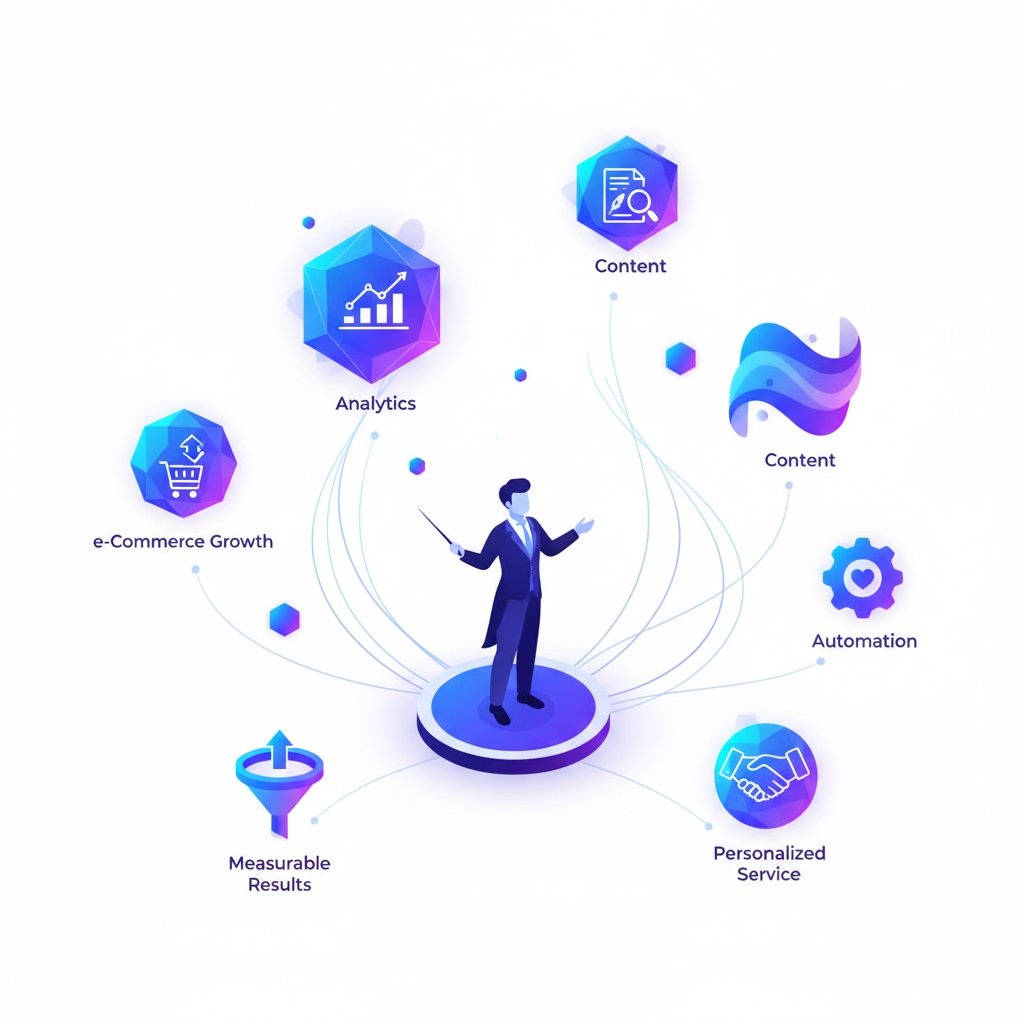
AI orchestration is the coordination of multiple AI agents working together to accomplish complex marketing tasks autonomously. Think of it like conducting an orchestra—instead of playing every instrument yourself, you have specialized musicians (AI agents) who work in harmony under intelligent direction.
Traditional marketing automation follows rigid if-then rules you programmed months ago. AI orchestration uses autonomous AI that learns, adapts, and makes decisions in real-time based on customer behavior, market conditions, and your business goals. For a Miami boutique or Fort Lauderdale service company, this means your marketing works smarter while you focus on what you do best.
The Difference Between Basic Automation and AI Orchestration
Basic marketing automation sends an email when someone joins your list. AI orchestration analyzes that subscriber’s behavior across multiple channels, determines the optimal message timing, personalizes content based on their interests, adjusts your ad spend accordingly, and coordinates follow-up across email, social media, and retargeting—all without manual intervention.
A Boca Raton e-commerce client implemented AI orchestration in early 2026 and saw their conversion rates jump 43% within sixty days. The system identified that certain customer segments responded better to video content on Instagram while others preferred detailed email comparisons. The AI agents automatically shifted resources and messaging for each group.
Understanding Multi-Agent Systems for Marketing
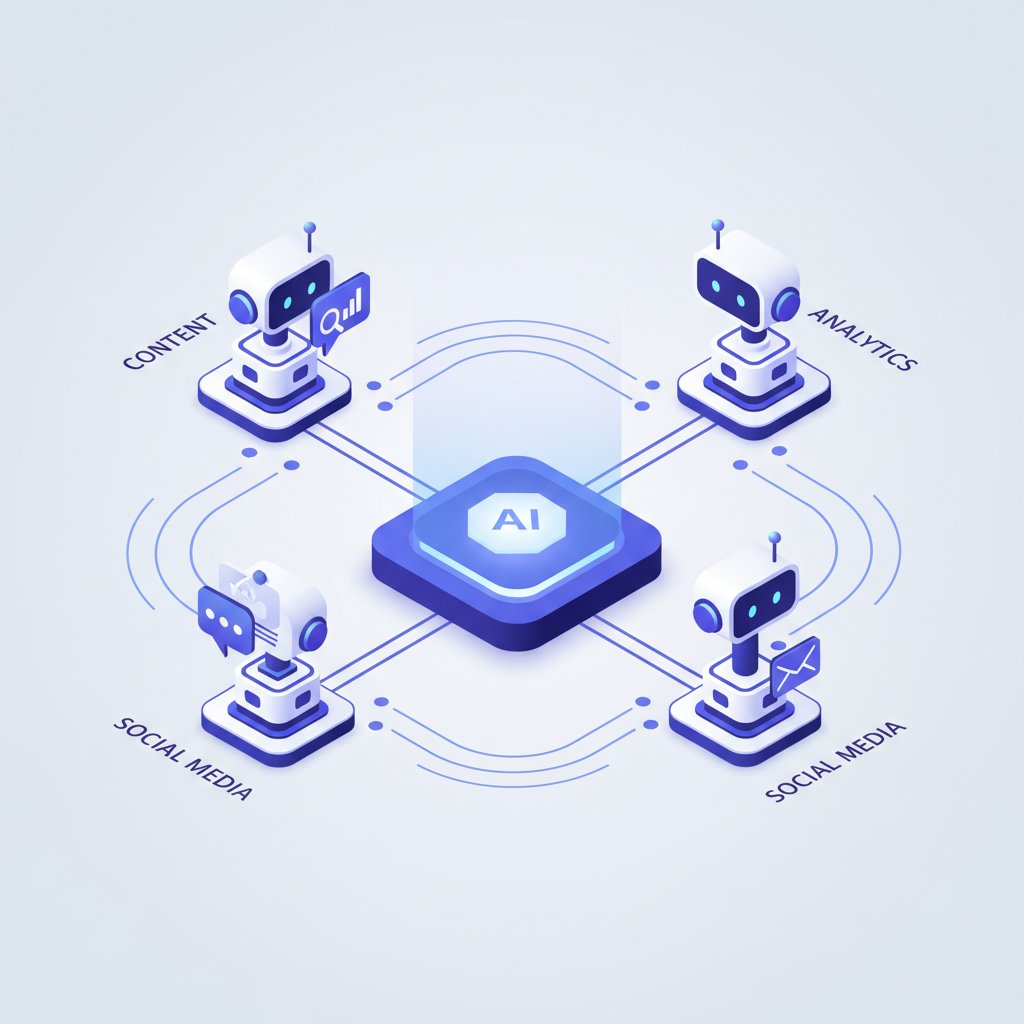
Multi-agent systems deploy specialized AI agents that each handle specific marketing functions while communicating with each other to optimize overall performance. Instead of one AI trying to do everything, you have a team of focused agents working together.
Key AI Agents in Marketing Orchestration
Content Agent: Generates and optimizes marketing copy, social posts, and email content based on performance data and audience engagement patterns.
Analytics Agent: Continuously monitors campaign performance, customer behavior, and market trends to inform other agents’ decisions.
Customer Journey Agent: Maps individual customer paths and determines the next best action for each prospect or customer.
Budget Optimization Agent: Dynamically allocates marketing spend across channels based on real-time ROI and performance metrics.
Personalization Agent: Tailors messages, offers, and experiences to individual customers based on their preferences and behaviors.
These agents don’t work in isolation. They share information and coordinate actions through what’s called agentic workflows—structured processes where AI agents collaborate to achieve marketing objectives that would be impossible with traditional automation.
Practical Applications for Small Business Marketing
Let’s move from theory to practice. Here’s how South Florida businesses are using AI orchestration right now to generate measurable results.
Dynamic Email Campaign Management
A West Palm Beach wellness center implemented agentic automation for their email marketing. The system doesn’t just send scheduled emails—it analyzes each recipient’s engagement history, predicts the best send time, personalizes subject lines and content, and automatically adjusts frequency based on individual preferences. Their email revenue increased 67% compared to their previous static campaigns.
Cross-Channel Customer Acquisition
AI orchestration excels at coordinating efforts across multiple platforms. When a potential customer visits your website, AI agents can trigger a coordinated response: retargeting ads on Facebook and Instagram with specific products they viewed, personalized email sequences based on their browsing behavior, and adjusted bidding on Google Ads for related searches—all automatically calibrated to maximize conversion probability while minimizing cost.
Intelligent Lead Scoring and Nurturing
Not all leads are equal, and AI agents can identify which prospects deserve immediate attention and which need longer nurturing. A Coral Springs B2B service company uses multi-agent systems to score leads based on dozens of behavioral signals, then automatically routes high-value prospects to sales while nurturing others with targeted content until they’re ready to buy. Their sales team now spends 80% less time on unqualified leads.
Getting Started: Your Roadmap to AI Orchestration
Implementing AI orchestration doesn’t mean rebuilding your entire marketing infrastructure overnight. Smart businesses start strategically and scale what works.
Step One: Identify Your Bottlenecks
Where does your marketing break down? Is it generating enough content? Following up with leads consistently? Optimizing ad spend? Personalizing customer experiences? Start by identifying the areas where autonomous AI could have the biggest impact on your bottom line.
Step Two: Choose Your Entry Point
Most South Florida businesses see fastest results starting with one of these areas:
- Email marketing automation with dynamic personalization
- Social media content generation and scheduling with engagement optimization
- Ad spend optimization across Google and Meta platforms
- Customer segmentation and journey mapping
- Lead scoring and sales enablement
Step Three: Implement and Monitor
The beauty of agentic workflows is they improve with data. Start with clear baseline metrics—current conversion rates, cost per acquisition, email engagement rates, etc. Then implement your AI orchestration system and monitor performance weekly. The AI agents learn and optimize continuously, but you should review overall strategy monthly to ensure alignment with business goals.
Real Success Stories from South Florida
A Pompano Beach home services company struggled with inconsistent lead follow-up. Their team was skilled but overwhelmed. They implemented AI orchestration that automatically scored inbound leads, sent personalized initial responses within seconds, scheduled follow-ups based on lead behavior, and alerted the team only when prospects showed high buying intent. Result: 52% increase in booked appointments with the same size sales team.
A Miami fashion retailer used multi-agent systems to coordinate their holiday marketing in late 2025. Different AI agents handled email campaigns, Instagram Stories, Facebook ads, and website personalization—all working together to create consistent, personalized experiences for different customer segments. Their holiday revenue grew 38% year-over-year despite flat traffic numbers, proving that smarter marketing beats just more marketing.
Common Concerns and How to Address Them
Won’t This Feel Impersonal to My Customers?
Actually, the opposite. AI orchestration enables deeper personalization than humanly possible. You can’t manually personalize every email, ad, and interaction for hundreds or thousands of customers. Autonomous AI can—making each customer feel like you’re speaking directly to them. The key is maintaining your brand voice and values in how you configure the systems.
Is This Too Complex for My Small Business?
The technology itself is complex, but using it doesn’t have to be. Modern AI orchestration platforms are designed for business owners, not data scientists. You define goals, provide brand guidelines, and set guardrails. The AI agents handle the execution. Think of it like using Google Maps—the GPS technology is incredibly sophisticated, but using it is simple.
What About Cost?
AI orchestration has become remarkably affordable in 2026. Many businesses save money overall because agentic automation reduces the need for multiple separate software subscriptions and increases the efficiency of marketing spend. A typical South Florida small business might invest $500-2000 monthly for comprehensive AI orchestration—often less than they were spending on less effective tools and wasted ad spend.
Best Practices for Maximum Results
Based on working with dozens of South Florida businesses implementing marketing automation, here are proven practices that separate success stories from disappointments:
Maintain Human Oversight: AI agents should enhance your marketing strategy, not replace strategic thinking. Review performance regularly and adjust goals as your business evolves.
Feed Quality Data: Multi-agent systems are only as good as the data they learn from. Ensure your customer data is clean, organized, and comprehensive.
Start Simple, Scale Smart: Begin with one or two agentic workflows, prove ROI, then expand to other areas of your marketing.
Preserve Your Brand Voice: Configure AI agents with clear brand guidelines so automated content still sounds authentically like your business.
Test and Iterate: Even autonomous AI benefits from A/B testing different approaches. Let the agents optimize tactics while you test different strategic directions.
The Future Is Already Here
AI orchestration isn’t emerging technology—it’s current reality delivering measurable results for businesses across South Florida. The question isn’t whether to adopt agentic automation, but how quickly you can implement it before your competitors do.
The businesses thriving in 2026 aren’t necessarily spending more on marketing. They’re orchestrating smarter, using multi-agent systems to do what was impossible just two years ago: delivering personalized, timely, relevant marketing at scale while maintaining the local, personal touch that South Florida customers value.
Ready to Transform Your Marketing?
AI orchestration might sound complex, but implementing it doesn’t have to be. The right partner can help you identify opportunities, implement proven agentic workflows, and start seeing results within weeks—not months.
At UltraWeb Marketing, we specialize in making sophisticated marketing technology accessible and profitable for South Florida businesses. We’re not a faceless corporate agency—we’re your local digital marketing partner who understands the unique challenges and opportunities of businesses in Miami, Fort Lauderdale, Boca Raton, and throughout South Florida.
Contact UltraWeb Marketing today for a free consultation on how AI orchestration and marketing automation can drive measurable growth for your business. Let’s orchestrate your success together.
Frequently Asked Questions
What’s the difference between AI orchestration and traditional marketing automation?
Traditional marketing automation follows fixed rules you program in advance, like sending an email three days after someone subscribes. AI orchestration uses autonomous AI agents that make real-time decisions based on current data, adapting strategies continuously without manual reprogramming. It’s the difference between a scheduled sprinkler system and smart irrigation that adjusts based on weather, soil moisture, and plant needs.
How long does it take to see results from agentic automation?
Most South Florida businesses see initial improvements within 2-4 weeks as AI agents begin learning from your data and optimizing basic functions. Significant results typically appear within 60-90 days as the multi-agent systems gather enough data to make sophisticated optimizations. The systems continue improving indefinitely as they accumulate more customer interaction data.
Do I need technical expertise to use AI orchestration for marketing?
No technical expertise is required. Modern AI orchestration platforms are designed for business owners and marketers, not programmers. You’ll work through user-friendly interfaces to set goals, define your brand voice, and review performance. The complex technical work happens behind the scenes, managed by the AI agents themselves.
Can AI orchestration work with my existing marketing tools?
Yes, most AI orchestration systems integrate with popular marketing platforms including email services, CRM systems, social media platforms, and advertising networks. The AI agents can pull data from and push actions to your existing tools, creating a coordinated system without requiring you to abandon platforms that already work for your business.
How much control do I have over what the AI agents do?
You maintain complete strategic control. You set goals, define guardrails, establish brand guidelines, and determine budget limits. The AI agents optimize tactics within the parameters you establish. You can always review their actions, adjust settings, or override decisions. Think of it as delegating execution while maintaining strategic oversight.