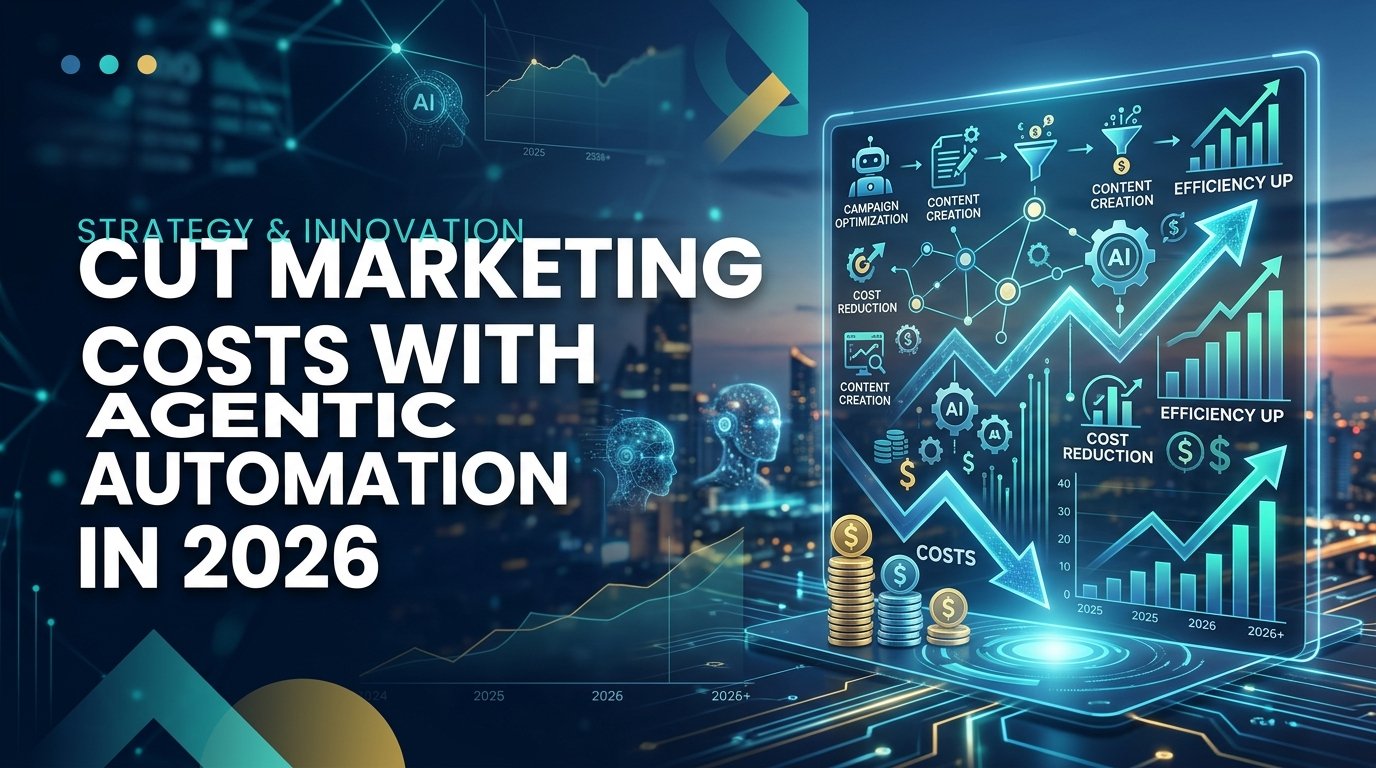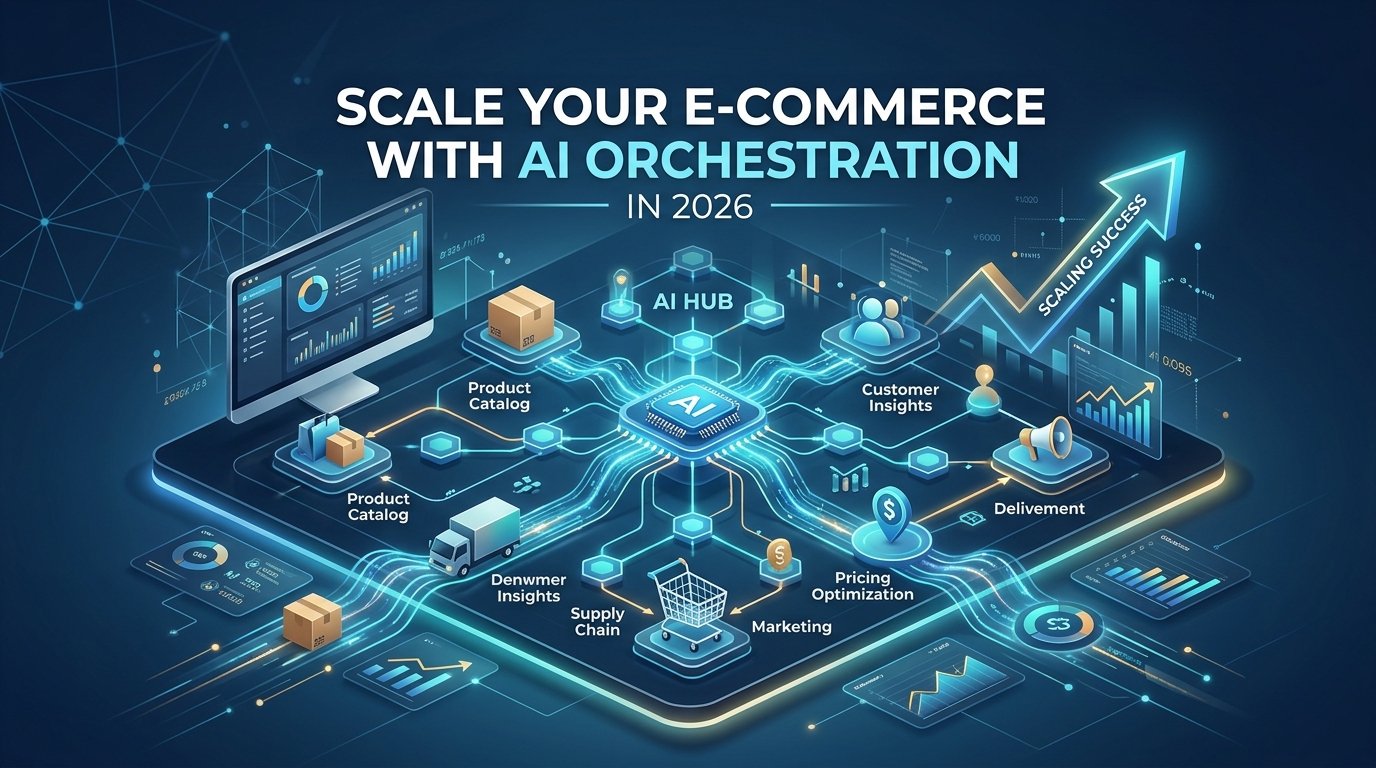
Small business owners in South Florida are facing a challenging reality: digital marketing costs continue to climb while budgets remain tight. According to recent data, businesses are spending an average of 15-20% more on marketing in 2026 compared to two years ago, yet many aren’t seeing proportional returns. The good news? A revolutionary approach called agentic automation is helping smart business owners slash their marketing expenses while actually improving results.
If you’re a small business owner juggling multiple responsibilities, you’ve probably felt the pain of expensive marketing agencies, costly advertising campaigns, and time-consuming manual tasks. What if you could reduce those costs by 40-60% while maintaining or even enhancing your marketing effectiveness? That’s the promise of agentic automation, and it’s more accessible than you might think.
What Is Agentic Automation and Why Does It Matter?
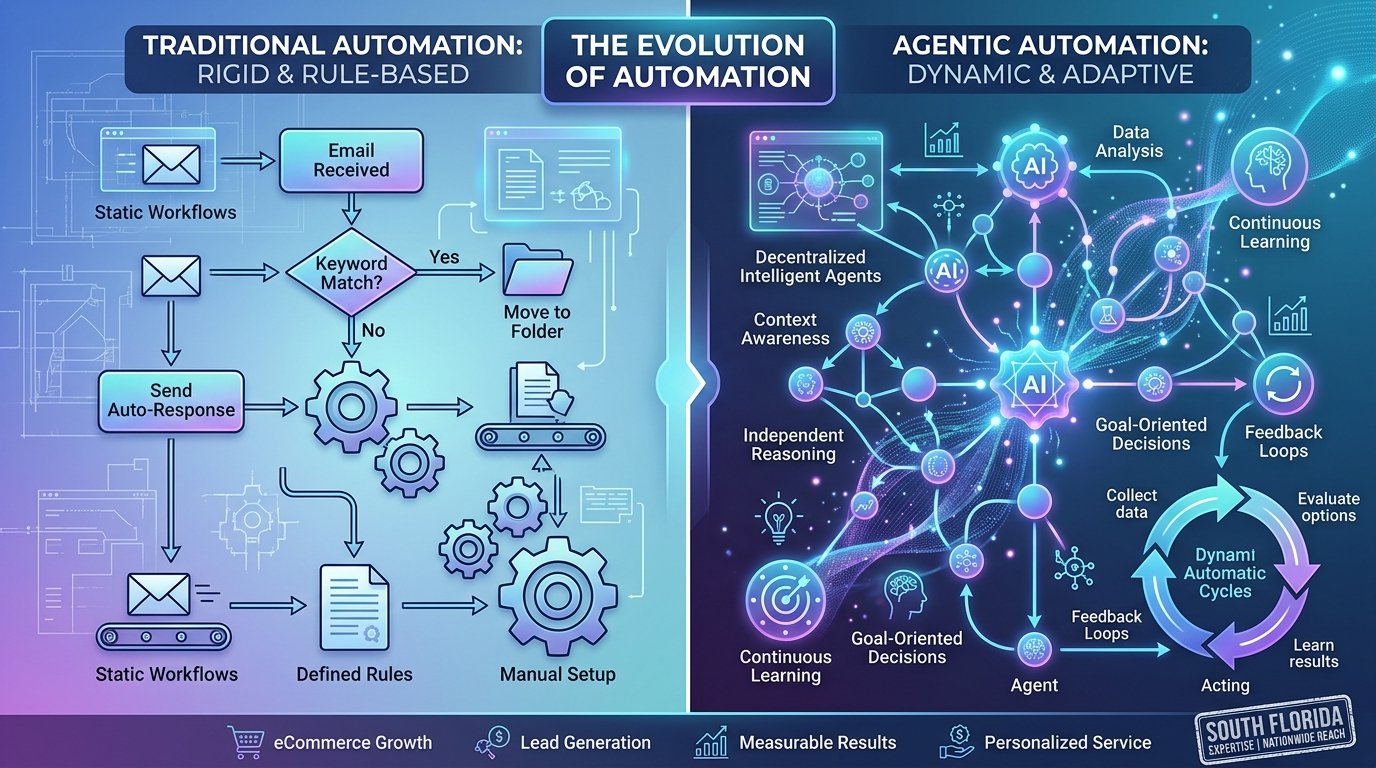
Agentic automation represents a significant leap forward from traditional marketing automation. While conventional automation follows simple if-then rules (like sending an email when someone subscribes), agentic automation uses autonomous AI agents that can make decisions, learn from outcomes, and adjust strategies without constant human intervention.
Think of AI agents as digital team members who work 24/7, analyzing data, making informed decisions, and executing marketing tasks based on your business goals. These aren’t just automated tools—they’re intelligent systems that understand context, adapt to changing conditions, and continuously optimize for better results.
For a South Florida e-commerce store selling beach gear, this might mean an AI agent that automatically adjusts ad spending based on weather patterns, tourist season fluctuations, and inventory levels—all without you lifting a finger. For a Miami-based service business, it could mean an agent that qualifies leads, schedules consultations, and personalizes follow-up communications based on prospect behavior.
The Real Cost of Traditional Marketing Approaches
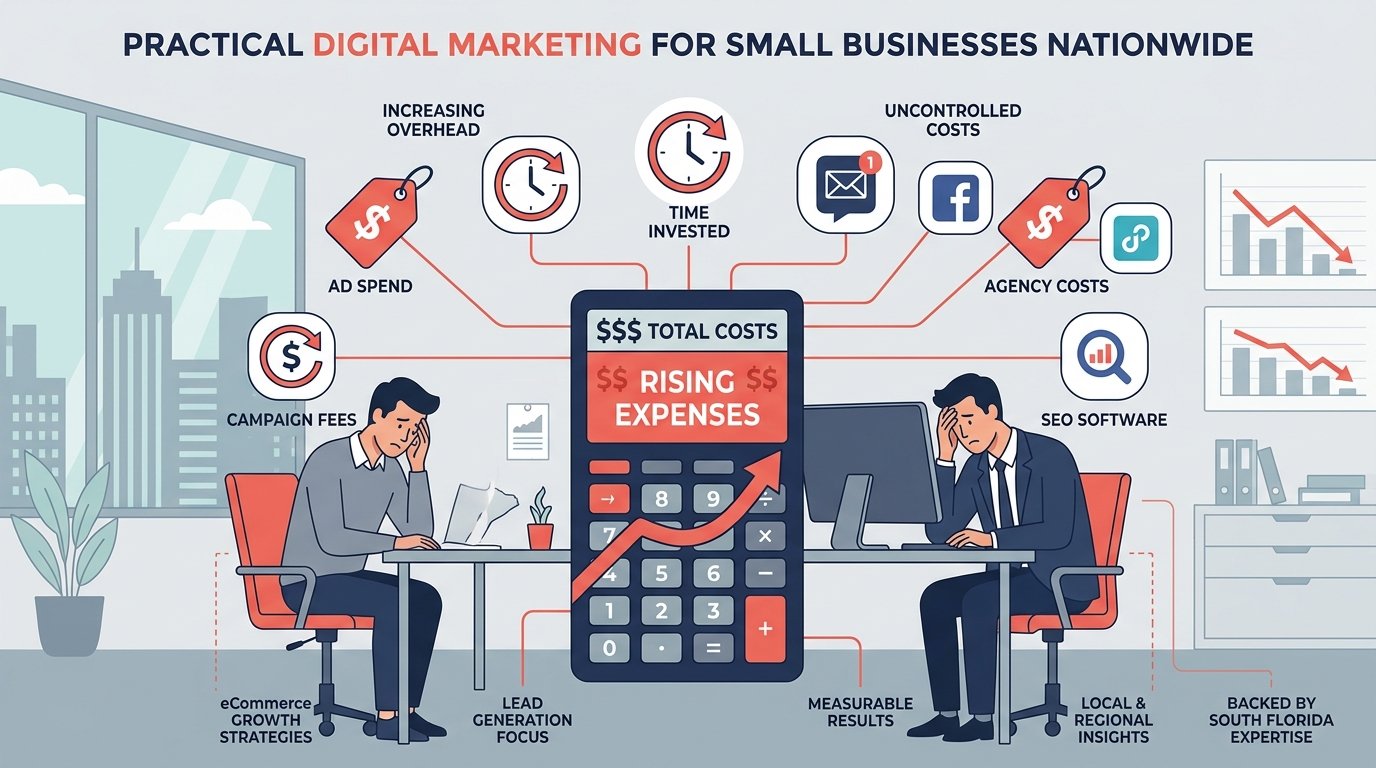
Before diving into solutions, let’s acknowledge what traditional digital marketing actually costs small businesses:
- Agency retainers: $2,000-$10,000 monthly for basic services
- Staff time: 10-30 hours weekly managing campaigns, creating content, and analyzing data
- Software subscriptions: $300-$1,500 monthly for email platforms, social media tools, analytics, and CRM systems
- Ad spend waste: 20-40% of advertising budgets lost to poor targeting or timing
- Opportunity costs: Hours spent on marketing that could go toward core business activities
A typical small business owner in Fort Lauderdale or West Palm Beach might easily spend $4,000-$8,000 monthly on marketing when factoring in all these elements. For many businesses, that’s eating up 30-50% of their marketing-related revenue.
How Agentic Workflows Reduce Marketing Costs
Automated Campaign Management
Agentic automation excels at managing complex marketing campaigns across multiple channels. Rather than manually adjusting bids, testing ad copy, or scheduling social media posts, autonomous AI systems handle these tasks based on performance data and predefined goals.
One of our South Florida clients, a Boca Raton-based home services company, implemented agentic workflows for their Google Ads campaigns. The AI agent continuously monitors performance metrics, automatically pauses underperforming ads, reallocates budget to high-converting keywords, and even generates new ad variations to test. The result? Their cost per lead dropped 43% within three months while lead volume increased by 27%.
Intelligent Content Creation and Distribution
Content marketing typically requires significant time and expertise. Agentic automation doesn’t replace human creativity entirely, but it dramatically reduces the workload. AI agents can generate blog post outlines, social media captions, email subject lines, and even first drafts that human marketers can refine.
More importantly, these agents determine optimal posting times, personalize content for different audience segments, and automatically distribute content across appropriate channels. What once took 15-20 hours weekly now requires 3-5 hours of human oversight and refinement.
Dynamic Lead Nurturing
Traditional email automation sends predetermined sequences regardless of individual prospect behavior. Agentic workflows analyze each lead’s interactions, engagement patterns, and characteristics to create personalized nurturing paths.
A Miami-based B2B service provider using agentic automation saw their email engagement rates increase by 68% and their sales cycle shorten by 22 days. The AI agent identifies buying signals, sends relevant content at optimal times, and alerts sales staff only when leads are genuinely ready to purchase—eliminating wasted time on cold prospects.
Predictive Budget Allocation
One of the most powerful cost-saving features of agentic automation is predictive budget management. Rather than setting monthly budgets and hoping for the best, AI agents analyze historical performance data, seasonal trends, competitive landscape, and current results to dynamically allocate marketing spend where it will generate the best ROI.
This means automatically shifting budget from underperforming Facebook ads to higher-converting Google Shopping campaigns, or recognizing when organic reach is strong enough to reduce paid social spend temporarily. These micro-adjustments, made continuously, can reduce overall marketing costs by 25-35% while maintaining or improving lead generation.
Implementing Agentic Automation: A Practical Approach
Start with Your Biggest Pain Points
Don’t try to automate everything at once. Identify which marketing tasks consume the most time or money without delivering proportional results. Common starting points include:
- Email marketing and lead nurturing sequences
- Social media posting and engagement
- Ad campaign management and optimization
- Customer segmentation and personalization
- Performance reporting and analysis
Choose the Right Tools and Partners
Agentic automation requires sophisticated technology, but you don’t need a massive IT department to implement it. Many modern marketing platforms now incorporate AI agents and autonomous decision-making capabilities. Look for solutions that integrate with your existing tools and offer clear ROI tracking.
Working with a digital marketing partner who understands both the technology and your local market can accelerate implementation and results. South Florida businesses have unique characteristics—seasonal tourism patterns, demographic diversity, competitive industries—that generic automation misses.
Maintain Human Oversight
Agentic automation is powerful, but it works best with human guidance. Set clear goals, establish guardrails (like maximum daily ad spend or brand voice guidelines), and regularly review performance. The goal isn’t to eliminate human involvement—it’s to free humans from repetitive tasks so they can focus on strategy, creativity, and relationship-building.
Real-World Results: What to Expect
Based on implementations across various South Florida small businesses in 2026, here’s what realistic agentic automation can achieve:
- 30-50% reduction in time spent on marketing tasks: Freeing 10-20 hours weekly for business owners and staff
- 25-40% decrease in customer acquisition costs: Through better targeting and continuous optimization
- 40-60% improvement in marketing team productivity: By eliminating repetitive manual work
- 20-35% reduction in overall marketing expenses: While maintaining or increasing lead generation
- 15-25% increase in conversion rates: Through personalized, timely communications
An e-commerce retailer in Delray Beach selling specialty food products implemented comprehensive agentic workflows across email marketing, social advertising, and inventory-based promotional campaigns. Within six months, their marketing costs dropped from $6,200 to $3,800 monthly while monthly revenue increased by 31%. The AI agents identified optimal discount levels, predicted inventory needs, and personalized product recommendations—tasks that previously required manual analysis and guesswork.
Common Concerns About Agentic Automation
Many small business owners hesitate to embrace agentic automation due to misconceptions. Let’s address the most common concerns:
“It’s too expensive or complex for small businesses.” While enterprise-level AI solutions can be costly, accessible agentic automation tools designed for small businesses now exist at price points lower than traditional agency fees. Implementation complexity has decreased dramatically, with many platforms offering guided setup processes.
“I’ll lose control over my brand messaging.” Properly configured agentic systems operate within parameters you define. You set brand voice guidelines, approval thresholds, and strategic boundaries. The AI handles execution within those guardrails.
“Technology can’t replace human creativity and relationships.” Absolutely correct—and that’s not the goal. Agentic automation handles data analysis, repetitive optimization, and tactical execution so humans can focus on creative strategy, customer relationships, and high-value activities.
The Future of Small Business Marketing
Agentic automation isn’t a futuristic concept—it’s available and practical right now in 2026. Small businesses that adopt these technologies gain competitive advantages: lower costs, better results, and more time to focus on what they do best.
The gap between businesses using intelligent automation and those relying solely on manual processes will only widen. Early adopters are already seeing substantial benefits while their competitors struggle with rising costs and decreasing returns.
For South Florida businesses facing intense competition and demanding customers, agentic automation offers a way to compete effectively without breaking the bank. Whether you’re running a boutique in Coral Gables, a contracting business in Jupiter, or an online store shipping nationwide, these tools can transform your marketing efficiency and profitability.
Take the Next Step
Reducing marketing costs while improving results isn’t about cutting corners—it’s about working smarter. Agentic automation gives small businesses access to sophisticated marketing capabilities previously available only to enterprises with massive budgets and large teams.
If you’re spending more on marketing than you’d like while feeling overwhelmed by the constant demands of digital channels, it’s time to explore how agentic workflows can transform your approach. The technology exists, proven results are documented, and the barrier to entry continues to decrease.
Ready to discover how agentic automation can reduce your marketing costs while improving results? UltraWeb Marketing specializes in helping South Florida small businesses implement intelligent automation that delivers measurable ROI. Contact us today for a free marketing automation assessment and see exactly how much you could save while growing your business.
Frequently Asked Questions
What is the difference between traditional marketing automation and agentic automation?
Traditional marketing automation follows preset rules and sequences you manually create, like sending an email three days after someone subscribes. Agentic automation uses autonomous AI agents that make intelligent decisions based on data, learning from outcomes and adjusting strategies without constant human input. Think of traditional automation as following a recipe, while agentic automation is like having a chef who can adapt based on available ingredients and diner preferences.
How much can small businesses realistically save with agentic automation?
Most small businesses implementing agentic automation see 25-40% reduction in overall marketing costs within 3-6 months. This comes from reduced agency fees, less wasted ad spend, decreased staff time on repetitive tasks, and consolidated software tools. A business spending $5,000 monthly on marketing might reduce that to $3,000-$3,750 while maintaining or improving results.
Do I need technical expertise to implement agentic workflows?
No extensive technical knowledge is required. Modern agentic automation platforms are designed for business owners, not developers. However, working with a knowledgeable digital marketing partner can accelerate implementation and optimize results, especially when integrating with existing systems and aligning with specific business goals.
Will agentic automation work for my specific type of business?
Agentic automation benefits virtually any business that does digital marketing—e-commerce stores, service businesses, B2B companies, restaurants, healthcare providers, and professional services. The specific applications vary, but the core benefits of reduced costs and improved efficiency apply across industries. Local South Florida businesses particularly benefit from AI agents that understand seasonal patterns and regional market dynamics.
How long does it take to see results from agentic automation?
Initial improvements typically appear within 2-4 weeks as AI agents begin optimizing campaigns and workflows. Substantial cost reductions and performance improvements usually materialize within 60-90 days as the systems accumulate data and refine their decision-making. The timeline varies based on implementation scope and current marketing maturity.