Small business marketing just hit a turning point. While you’ve been juggling social media posts, email campaigns, customer follow-ups, and SEO optimization, a new technology has emerged that’s changing how savvy business owners approach their marketing: multi-agent AI systems. These aren’t your typical automation tools that simply schedule posts or send templated emails. We’re talking about intelligent systems where multiple AI agents work together, each handling specific tasks while communicating and coordinating like a well-trained team.
For South Florida business owners managing tight budgets and even tighter schedules, this technology represents something extraordinary: the ability to compete with enterprise-level marketing operations without the enterprise-level costs or complexity. Let’s explore why multi-agent systems are becoming essential for small business growth in 2026 and beyond.
Understanding Multi-Agent AI Systems: Your Digital Marketing Team
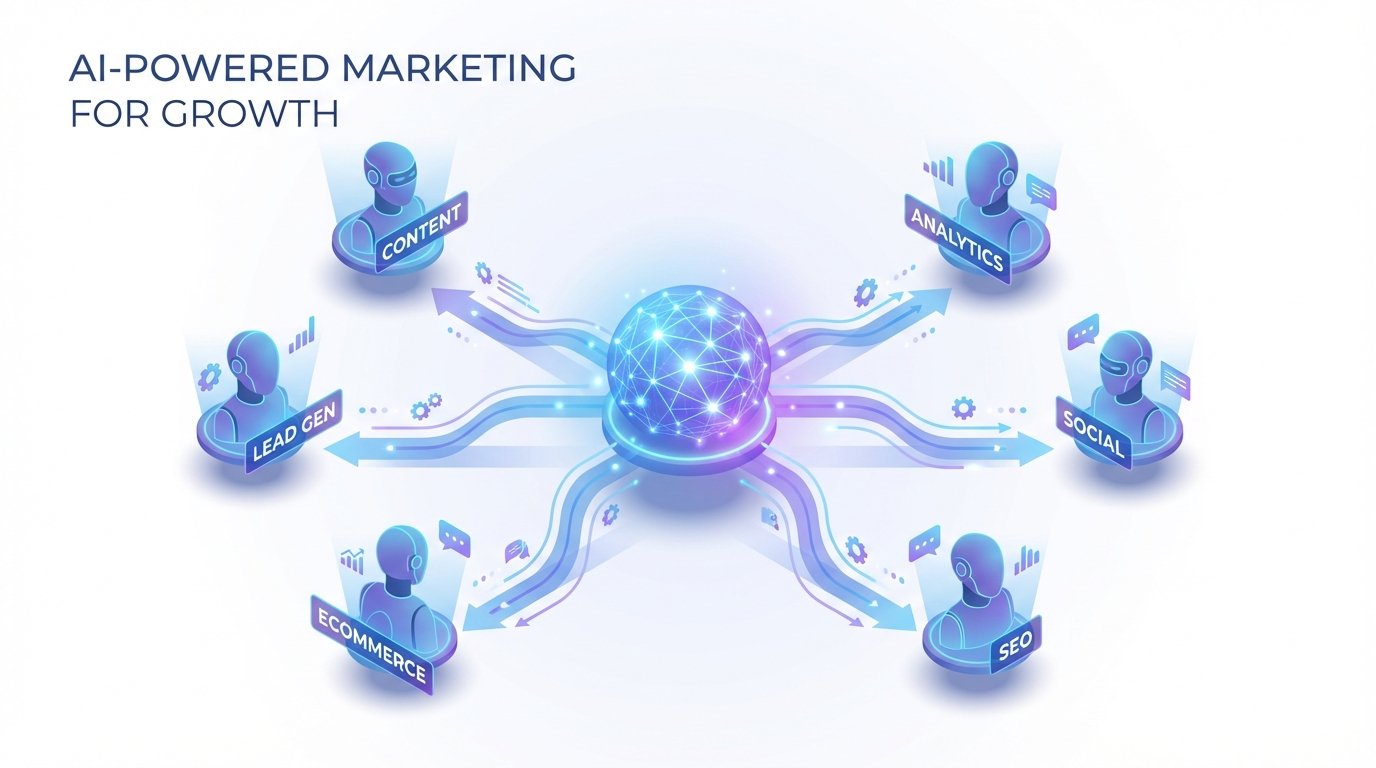
Think of multi-agent systems as hiring a complete marketing department, except each team member is an AI agent specialized in specific tasks. Unlike single-function automation tools that work in isolation, these AI agents collaborate through agentic workflows, sharing information and adjusting their actions based on real-time results.
Here’s a practical example: When a potential customer visits your website, one agent tracks their behavior and interests. Another agent analyzes their profile to determine the best communication approach. A third agent crafts personalized email content, while a fourth optimizes the send time based on engagement patterns. A fifth agent monitors responses and triggers follow-up actions. All of this happens automatically, with each agent applying agentic reasoning to make smart decisions without human intervention.
This level of AI orchestration was impossible just two years ago. The technology required massive computing resources and specialized programming. Today, platforms are emerging that put these capabilities within reach of small businesses, and the results are transforming marketing outcomes.
The Power of Autonomous AI in Marketing Operations
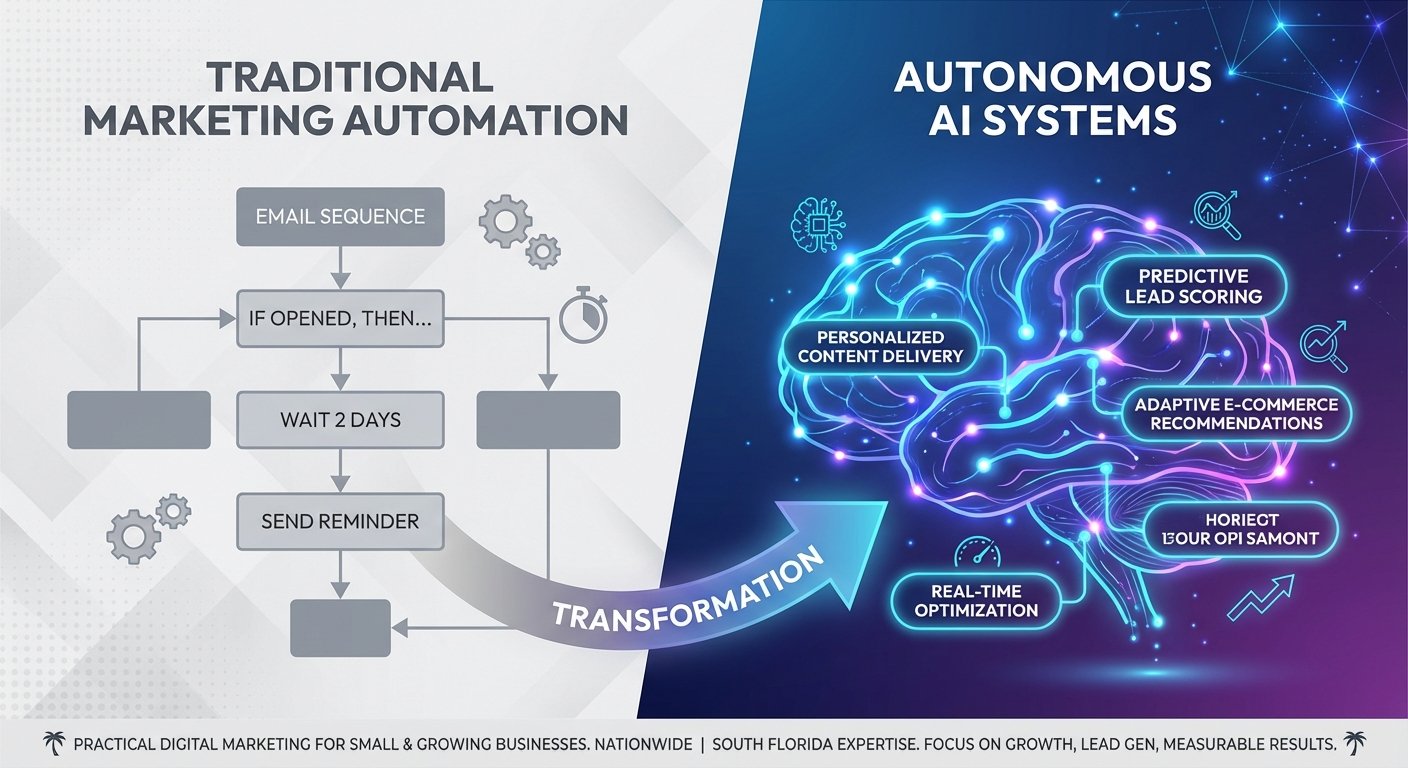
Traditional marketing automation follows rigid rules: if this happens, do that. Autonomous AI systems think differently. They learn from data, adapt to changing conditions, and make nuanced decisions that would typically require human judgment.
Consider content creation. A basic automation tool might schedule pre-written posts. An autonomous AI agent analyzes your audience’s engagement patterns, identifies trending topics in your industry, generates content tailored to different customer segments, determines optimal posting times, and adjusts future content based on performance metrics. It doesn’t just execute tasks; it strategizes.
A Miami-based e-commerce store selling outdoor gear implemented a multi-agent system in early 2025. One agent monitored weather forecasts and local events, another managed inventory levels, while a third adjusted promotional campaigns in real-time. When a major fishing tournament was announced in the Keys, the system automatically increased promotion of fishing equipment, adjusted pricing strategies, and created targeted email campaigns for relevant customer segments. Sales increased 47% during the tournament period compared to previous events, without the owner lifting a finger.
How Agentic Automation Differs From Traditional Tools
The distinction between conventional automation and agentic automation is fundamental. Traditional systems are reactive and rule-based. Agentic systems are proactive and goal-oriented.
Traditional Automation Limitations
- Follows predetermined workflows that can’t adapt
- Requires constant human supervision and adjustment
- Treats each marketing channel as a separate silo
- Breaks down when encountering unexpected scenarios
- Cannot prioritize tasks based on business impact
Agentic Automation Advantages
- Adjusts strategies based on real-time performance data
- Makes independent decisions within defined parameters
- Coordinates activities across all marketing channels
- Handles exceptions and unusual situations intelligently
- Focuses resources on highest-value opportunities
A Fort Lauderdale dental practice implemented agentic workflows for patient acquisition and retention. The AI agents identified that patients who received appointment reminders via text had higher show-up rates, but only if sent at specific times based on individual preferences. The system automatically tested different approaches with each patient, learned their preferences, and optimized communication accordingly. No-show rates dropped by 38% within three months, directly impacting revenue.
Real-World Applications for Small Businesses
Multi-agent systems excel in scenarios requiring coordination between multiple marketing functions. Here are applications delivering measurable results for small businesses right now:
Customer Journey Orchestration
Multiple AI agents track each customer’s journey from awareness to purchase and beyond. One agent identifies when prospects are research-ready versus purchase-ready. Another determines which content resonates most. A third manages retargeting campaigns. A fourth handles post-purchase engagement. Together, they create seamless experiences that feel personalized because they genuinely are.
Dynamic Pricing and Promotion Management
AI agents monitor competitor pricing, inventory levels, customer demand patterns, and profit margins simultaneously. They coordinate to adjust pricing strategies that maximize both revenue and customer satisfaction. A West Palm Beach boutique uses this approach to optimize markdowns on seasonal inventory while protecting margins on bestsellers, increasing overall profitability by 23%.
Content Marketing at Scale
One agent researches trending topics and keywords. Another generates content ideas aligned with your brand voice. A third creates the actual content. A fourth optimizes for SEO. A fifth schedules publication across platforms. A sixth analyzes performance and feeds insights back to the research agent. This agentic workflow enables small businesses to maintain consistent, high-quality content without hiring a full team.
Lead Qualification and Nurturing
Different agents assess lead quality using multiple criteria, determining which prospects deserve immediate attention versus long-term nurturing. The system automatically routes hot leads to sales staff while nurturing cooler prospects with relevant content until they’re ready to buy. This intelligent prioritization ensures you’re investing time with people most likely to become customers.
Implementation Without the Complexity
The beauty of modern multi-agent systems is that you don’t need technical expertise to benefit. The complexity happens behind the scenes. From a user perspective, you define your goals, provide access to your marketing channels, and let the agents work.
Start by identifying your biggest marketing bottlenecks. Are leads falling through the cracks? Is content creation consuming too much time? Are you struggling to maintain consistent customer communication? Multi-agent systems address these pain points by handling repetitive decisions and coordinating complex tasks automatically.
For most small businesses, implementation follows this path:
- Assessment: Identify which marketing functions consume the most time or produce inconsistent results
- Integration: Connect the system to your existing tools (website, CRM, email platform, social media)
- Configuration: Define business goals, brand guidelines, and decision parameters
- Training: The AI agents learn from your historical data and existing marketing materials
- Monitoring: Review performance metrics as agents optimize their approaches
- Refinement: Adjust goals and parameters based on results
A Boca Raton consulting firm completed this process in under three weeks. Within two months, the multi-agent system was generating qualified leads at one-third the cost of their previous approach while freeing the owner to focus on client delivery rather than marketing management.
The Competitive Advantage for South Florida Businesses
South Florida’s diverse, competitive market makes marketing particularly challenging. Tourist-dependent businesses face seasonal fluctuations. Service providers compete in saturated markets. E-commerce stores battle against national chains. Multi-agent systems help level this playing field.
These systems excel at managing complexity. They can simultaneously run different campaigns for tourists versus locals, adjust messaging for seasonal variations, coordinate across English and Spanish content, and respond to competitor moves in real-time. This level of sophistication was previously available only to large corporations with dedicated marketing teams.
The technology also addresses a critical challenge for small businesses: consistency. Marketing success requires persistent effort across multiple channels over extended periods. Humans get tired, distracted, or overwhelmed. AI agents maintain consistent performance indefinitely, ensuring your marketing never takes a day off.
Cost Considerations and ROI
The investment in multi-agent AI systems varies based on scale and complexity, but the ROI often appears within months. Consider what you’re currently spending on marketing labor, tools, and agencies. Most small businesses find that agentic automation reduces these costs while improving results.
A typical scenario: A business spending $3,000 monthly on various marketing tools and freelance support implements a multi-agent system for $1,200 monthly. The system consolidates multiple functions, reduces need for freelance work, and improves campaign performance. Within four months, increased lead generation and conversion rates deliver an additional $4,500 in monthly revenue. The net benefit exceeds $6,000 monthly.
Beyond direct cost savings, consider the value of your time. Hours previously spent managing campaigns, analyzing data, and coordinating activities can now focus on strategic decisions, customer relationships, and business development activities that only you can handle.
Looking Ahead: The Evolution of AI Agents
Multi-agent systems are evolving rapidly. Current systems handle marketing execution brilliantly. Near-future developments will add strategic capabilities like market opportunity identification, competitive intelligence gathering, and predictive customer behavior modeling.
The businesses adopting these technologies now are building competitive advantages that compound over time. AI agents learn continuously from your data, becoming more effective with each campaign. Early adopters gain head starts in optimization that competitors will struggle to match.
Getting Started With Multi-Agent Marketing Systems
If you’re ready to explore how multi-agent AI systems can transform your marketing, start with a clear-eyed assessment of your current situation. What’s working? What’s consuming too much time? Where are opportunities being missed?
Look for partners who understand both the technology and small business realities. The most sophisticated AI system delivers nothing if it’s not aligned with your actual business goals and operational constraints. You need guidance from experts who can bridge the gap between cutting-edge technology and practical business application.
The future of small business marketing isn’t about working harder or spending more. It’s about leveraging intelligent systems that multiply your efforts through autonomous AI working tirelessly on your behalf. Multi-agent systems represent the most significant advancement in marketing technology for small businesses in over a decade. The question isn’t whether to adopt this technology, but when—and the best time is now, while competitive advantages are still available to early movers.
Ready to put AI agents to work for your business? UltraWeb Marketing specializes in implementing multi-agent marketing systems for South Florida small businesses. We handle the complexity while you enjoy the results: more leads, better conversion rates, and marketing that runs smoothly without consuming your time. Contact us today for a free consultation and discover how agentic automation can transform your marketing results while giving you back your valuable time.