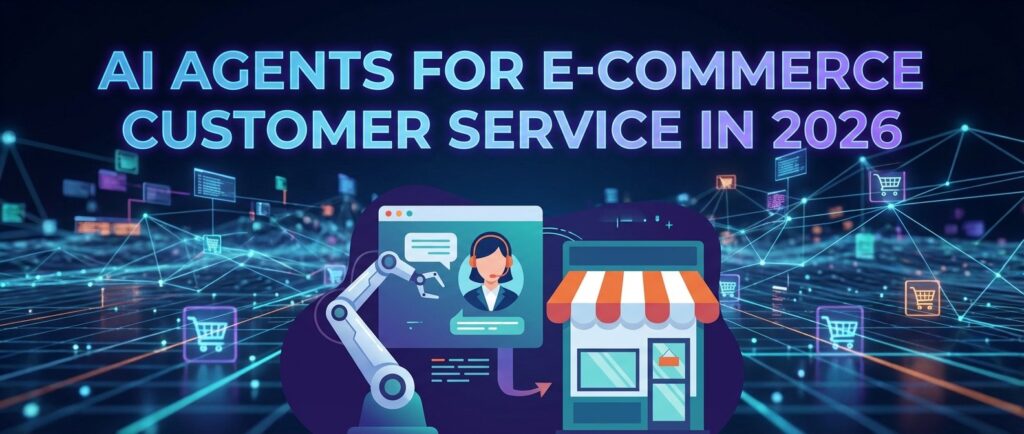
Your e-commerce store just received three customer inquiries at 2 AM about shipping times, product recommendations, and a return policy question. Without automated systems, these customers wait until morning—and 67% of online shoppers say they’ll abandon their cart if they can’t get quick answers. This is where AI agents transform your business operations in 2026.
AI agents aren’t just chatbots anymore. Today’s autonomous AI systems can handle complex customer interactions, process returns, track shipments, and even upsell products based on browsing behavior. For South Florida e-commerce businesses competing in a 24/7 digital marketplace, implementing agentic automation isn’t optional—it’s essential for staying competitive.
Understanding AI Agents vs. Traditional Chatbots
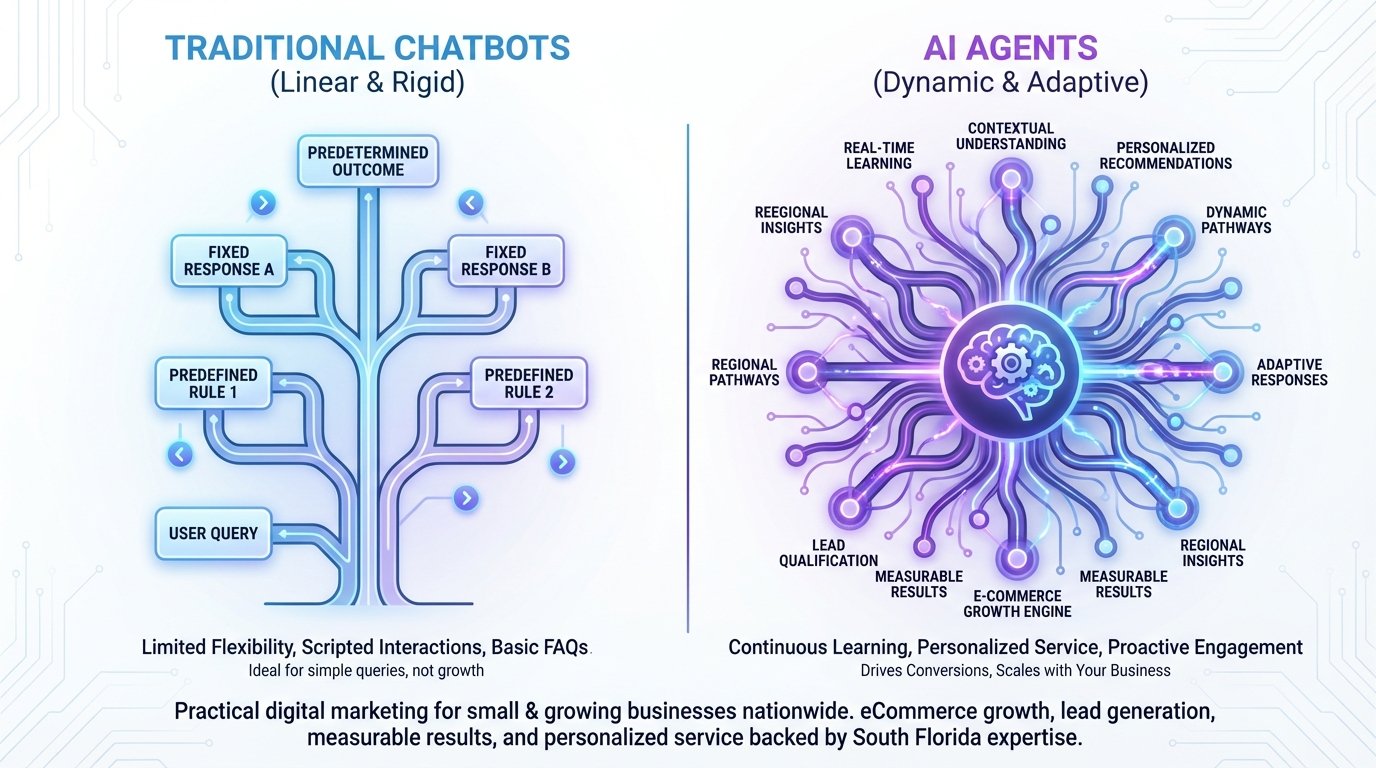
Before diving into implementation, let’s clarify what makes AI agents different from the chatbots you might have tried years ago. Traditional chatbots follow pre-programmed scripts and decision trees. They break down when customers ask unexpected questions or need multi-step problem resolution.
AI agents in 2026 use multi-agent systems powered by large language models. They understand context, remember previous conversations, make decisions autonomously, and can coordinate with other AI systems to complete complex tasks. Think of them as digital employees who never sleep, never get frustrated, and continuously learn from every interaction.
One Fort Lauderdale fashion boutique implemented AI agents last year and saw their customer response time drop from 4 hours to 30 seconds, while their conversion rate increased 34%. The system handled everything from size recommendations to styling advice, freeing their small team to focus on inventory management and product development.
Core Benefits of Customer Service Automation
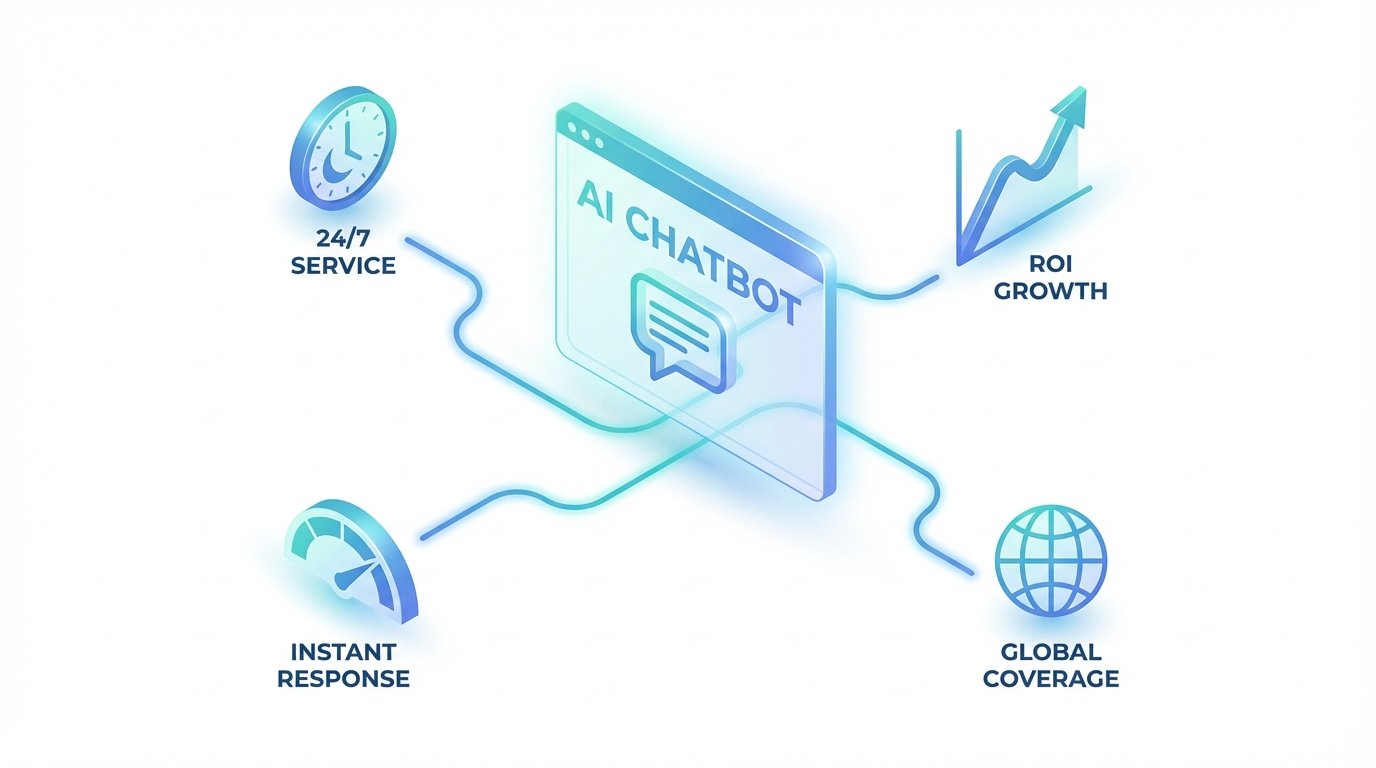
Customer service automation through AI agents delivers measurable ROI across multiple business metrics. Here’s what South Florida e-commerce stores are experiencing:
- 24/7 Availability: Customers get instant responses regardless of time zones or holidays, crucial for stores serving national or international markets
- Cost Reduction: One AI agent handles the workload of 3-5 customer service representatives at a fraction of the cost
- Consistency: Every customer receives accurate, brand-aligned responses without mood variations or human error
- Scalability: Handle Black Friday traffic spikes without hiring temporary staff or dealing with overwhelmed phone lines
- Data Collection: AI agents gather valuable insights about customer pain points, common questions, and product feedback
A Miami-based supplements company using agentic workflows reported that their AI system resolved 78% of customer inquiries without human intervention, saving approximately $8,500 monthly in labor costs while maintaining a 4.7-star customer satisfaction rating.
Key AI Agent Capabilities for E-commerce
Order Tracking and Status Updates
Modern AI agents integrate directly with your shipping providers and inventory systems. When customers ask “Where’s my order?”, the agent accesses real-time tracking data, provides specific delivery estimates, and can proactively notify customers about delays. This single feature alone reduces customer service tickets by 40-50% for most online stores.
Product Recommendations and Upselling
Unlike simple recommendation engines, AI agents in 2026 conduct conversational discovery. They ask follow-up questions, understand customer preferences, and suggest complementary products naturally within the conversation. A West Palm Beach home decor store saw their average order value increase 22% after implementing AI-powered recommendation agents.
Returns and Exchange Processing
Returns management consumes enormous staff time. Autonomous AI can verify return eligibility, generate shipping labels, process refunds, and offer alternatives like exchanges or store credit—all without human intervention. This speeds up the process customers hate while reducing your administrative burden.
Technical Support and Troubleshooting
For electronics, software, or complex products, AI agents can guide customers through setup processes, troubleshoot common issues, and escalate to human technicians only when necessary. They can reference product manuals, warranty information, and troubleshooting databases instantly.
Implementing Multi-Agent Systems
The most sophisticated e-commerce operations in 2026 don’t rely on a single AI agent—they deploy multi-agent systems where specialized agents handle different functions and coordinate seamlessly.
Here’s how this works in practice: A customer messages your store asking about a product, wants to know if it’s in stock locally, and needs it by Thursday. Your product specialist agent answers questions and checks inventory. It coordinates with your logistics agent to verify delivery timeframes. If the customer purchases, a follow-up agent takes over for order tracking, while a satisfaction agent checks in post-delivery.
This orchestration happens invisibly to the customer, who experiences one seamless conversation. Behind the scenes, you’ve deployed specialized agentic workflows that maximize efficiency and accuracy.
Integration with E-commerce Web Design
AI agents work best when properly integrated into your ecommerce web design from the start, not bolted on as an afterthought. During online store development or website redesigns, consider these integration points:
- Product Pages: Embed conversational AI that answers questions specific to the product being viewed
- Shopping Cart: Deploy agents that address abandonment triggers like shipping costs or delivery times
- Checkout Process: Offer instant support during the highest-friction moment of the customer journey
- Account Pages: Let customers manage orders, subscriptions, and preferences through conversational interfaces
- Email and SMS: Extend AI agent capabilities beyond your website to customer communication channels
A Boca Raton jewelry store’s recent ecommerce website development project included AI integration from day one. Their agent can access customer purchase history, recommend pieces based on previous purchases, and even remind customers about items left in wishlists during promotional periods. This strategic approach generated a 91% engagement rate with the AI system.
Choosing the Right AI Agent Platform
Not all AI agent platforms deliver the same results. When evaluating solutions for your e-commerce store, prioritize these factors:
Platform Integration: Ensure the system connects with your Shopify, WooCommerce, Magento, or custom platform. It should access order data, inventory information, and customer records without manual data entry.
Customization Options: Your AI agent should reflect your brand voice, understand your products, and follow your policies. Generic responses create generic experiences that don’t convert.
Training Capabilities: The best systems learn from your product catalog, FAQs, return policies, and past customer interactions. Initial training determines long-term performance.
Escalation Protocols: Even the best AI agents encounter situations requiring human judgment. Seamless handoff to your team with full conversation context is non-negotiable.
Analytics and Reporting: You need visibility into resolution rates, customer satisfaction scores, common issues, and conversion impact. Data-driven optimization separates good systems from great ones.
Best Practices for Implementation Success
Start with High-Volume, Low-Complexity Inquiries
Don’t try to automate everything immediately. Begin with repetitive questions that consume staff time but don’t require complex decision-making. Order tracking, business hours, shipping policies, and product availability are perfect starting points.
Maintain Your Brand Voice
Generic corporate AI responses feel impersonal and damage brand relationships. Invest time programming your agent to match your brand personality—whether that’s professional, playful, luxurious, or conversational. A Coral Springs outdoor gear retailer programmed their AI agent with adventure-focused language that resonated with their customer base, increasing engagement by 43%.
Always Offer Human Escalation
Customers should never feel trapped in an AI loop. Make it easy to reach a human representative, and ensure your AI agent recognizes frustration indicators that trigger automatic escalation. This safety valve prevents negative experiences.
Continuously Train and Optimize
AI agents improve through feedback loops. Review conversations regularly, identify gaps in knowledge or capability, and update training data. The most successful implementations treat AI agents as team members requiring ongoing development, not set-and-forget technology.
Real-World ROI: A South Florida Case Study
A Delray Beach swimwear company with $2.3 million in annual revenue implemented comprehensive customer service automation in early 2025. Their previous system relied on two part-time customer service reps and a shared inbox that often left customers waiting 6-8 hours for responses.
After integrating AI agents into their ecommerce website development, they saw dramatic improvements within 90 days:
- Average response time dropped from 6 hours to 45 seconds
- Customer service costs decreased 64%
- After-hours conversion rate increased 29%
- Cart abandonment rate fell from 71% to 58%
- Customer satisfaction scores improved from 3.8 to 4.6 stars
The owner reported that freeing his team from repetitive inquiries allowed them to focus on customer relationship building, social media engagement, and influencer partnerships—activities that directly grew revenue rather than just maintaining operations.
Overcoming Common Implementation Challenges
Small business owners often hesitate to implement AI agents due to perceived complexity or concerns about losing the personal touch that differentiates their business. These concerns are valid but manageable.
Technical Complexity: Modern platforms offer no-code and low-code implementations. You don’t need a development team to get started. However, working with experienced ecommerce web design professionals ensures optimal integration and customization.
Losing Personal Connection: AI agents don’t replace personal service—they handle routine tasks so you can focus on high-value customer interactions. Your best customers still get personal attention while new customers receive instant support.
Cost Concerns: Entry-level AI agent platforms start around $200-500 monthly, far less than hiring additional staff. Most businesses achieve positive ROI within 60-90 days through labor savings and conversion improvements.
The Future of Agentic Automation
AI agent capabilities continue expanding rapidly. By late 2026, expect to see agents that proactively reach out to customers showing purchase intent, automatically negotiate bulk order pricing within parameters you set, and coordinate with inventory systems to suggest pre-orders when items are low stock.
Early adopters gain competitive advantages that become harder for competitors to match. A customer who experiences instant, helpful AI-powered service on your site will notice the difference when they wait hours for responses elsewhere.
Taking the First Step
Implementing AI agents doesn’t require a complete operational overhaul. Start small, measure results, and expand capabilities as you see ROI. The key is beginning now rather than waiting until your competitors have already captured market share with superior customer experience.
At UltraWeb Marketing, we’ve helped dozens of South Florida e-commerce businesses implement customer service automation that actually works. We don’t believe in one-size-fits-all solutions—we customize AI agent systems that match your brand, integrate seamlessly with your existing platform, and deliver measurable results.
Ready to transform your customer service from a cost center into a revenue driver? Let’s talk about how AI agents can work specifically for your business. Contact UltraWeb Marketing today for a free consultation where we’ll analyze your customer service needs and show you exactly how autonomous AI can increase your sales while reducing your workload. Your competitors are already implementing these systems—don’t get left behind.
Frequently Asked Questions
How much does it cost to implement AI agents for e-commerce customer service?
Entry-level AI agent platforms typically range from $200-500 monthly for small e-commerce stores, with enterprise solutions reaching $2,000+ for high-volume operations. Custom development and integration services add $2,000-8,000 in setup costs. Most South Florida businesses achieve ROI within 60-90 days through reduced labor costs and increased conversion rates.
Will AI agents work with my existing e-commerce platform?
Most modern AI agent systems integrate with major platforms including Shopify, WooCommerce, Magento, BigCommerce, and custom-built stores. Integration requires API access to order management, inventory, and customer data systems. Professional implementation ensures seamless connectivity with your existing technology stack.
Can AI agents handle complex customer service issues?
AI agents in 2026 handle increasingly complex scenarios through multi-agent systems and advanced reasoning capabilities. They excel at troubleshooting, product recommendations, returns processing, and order modifications. However, nuanced situations requiring judgment, empathy, or policy exceptions still benefit from human intervention. Best practices include smart escalation protocols.
How long does it take to implement AI customer service automation?
Basic implementation takes 1-2 weeks for out-of-the-box solutions. Custom integration with specialized training typically requires 4-6 weeks. This includes system setup, knowledge base development, brand voice customization, platform integration, testing, and team training. Ongoing optimization continues indefinitely as the system learns from interactions.
Will customers know they’re talking to an AI agent?
Transparency best practices suggest identifying AI agents upfront while emphasizing immediate assistance. Most customers prefer instant AI responses over waiting for human agents. The key is providing excellent service—customers care about getting their questions answered quickly and accurately more than who or what is answering them.