
If your online store is growing fast and you’re starting to feel the squeeze—slow checkout times, limited customization options, or integration headaches—you’re not alone. Many South Florida business owners reach a point where their standard e-commerce platform can’t keep up with their ambitions. That’s exactly where Shopify Plus comes in. In 2026, this enterprise-level solution has become the go-to choice for businesses ready to scale without the technical nightmares that often come with growth.
Whether you’re processing hundreds of orders daily or planning a major expansion, understanding how to leverage Shopify Plus can transform your e-commerce operation from struggling to thriving. Let’s explore how this platform can become your competitive advantage in today’s digital marketplace.
What Makes Shopify Plus Different from Standard Shopify?
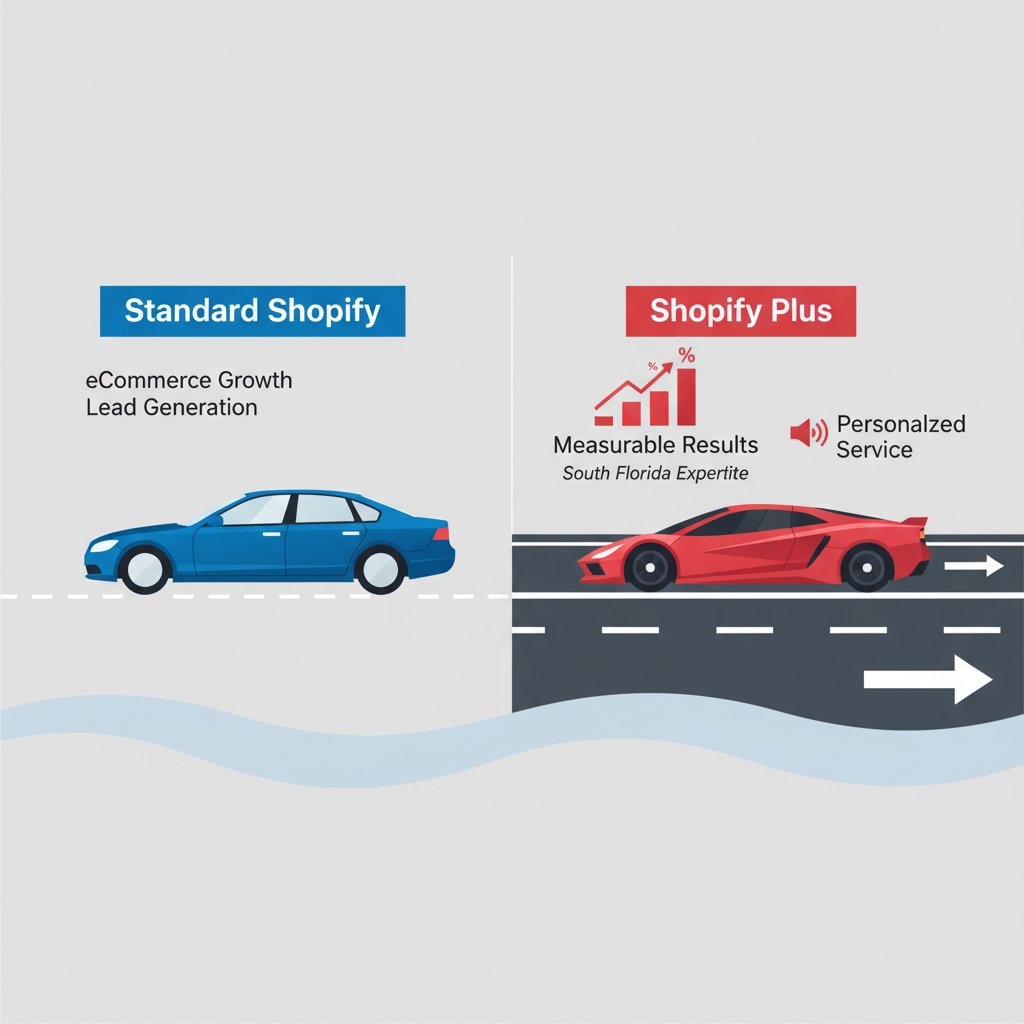
Before diving into scaling strategies, it’s important to understand what sets Shopify Plus apart. Think of standard Shopify as a reliable sedan—it gets you where you need to go. Shopify Plus is the high-performance vehicle built for businesses doing serious volume.
Standard Shopify works beautifully for businesses processing up to a few hundred orders daily. But when you’re hitting thousands of transactions, managing multiple storefronts, or need deep customization, you’ll quickly bump against limitations. Shopify Plus removes those barriers with enhanced API access, higher priority support, and infrastructure that handles massive traffic spikes without breaking a sweat.
The platform offers unlimited staff accounts, dedicated launch engineering, and access to Shopify’s exclusive wholesale channel. For South Florida businesses competing in competitive markets like Miami’s fashion scene or Fort Lauderdale’s tourism industry, these advantages translate directly to revenue growth.
Advanced Automation That Saves Time and Money
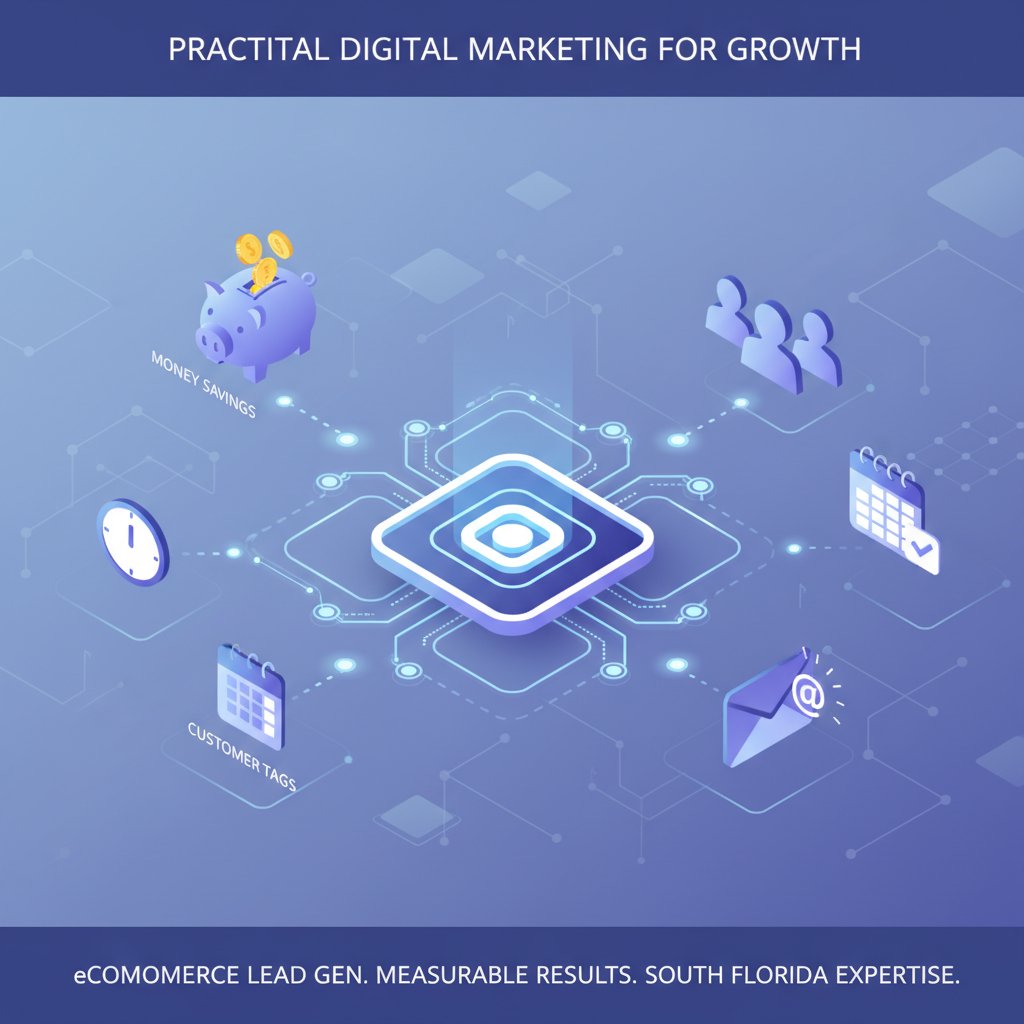
One of Shopify Plus’s most powerful features is Shopify Flow—an automation tool that handles repetitive tasks without requiring coding expertise. This is where custom ecommerce solutions really shine.
Imagine automatically tagging high-value customers for VIP treatment, sending personalized follow-up emails based on purchase behavior, or managing inventory across multiple locations without manual intervention. A Miami Beach boutique owner recently shared how Flow automation reduced their order processing time by 60%, allowing their small team to focus on customer service and product development instead of administrative tasks.
Practical Automation Examples
- Fraud prevention: Automatically flag suspicious orders based on custom criteria
- Inventory management: Receive notifications when stock runs low and automatically hide out-of-stock items
- Customer segmentation: Tag customers based on spending levels, location, or purchase frequency
- Loyalty rewards: Automatically send discount codes to repeat customers after their third purchase
These automations don’t just save time—they create consistent customer experiences that build loyalty and increase lifetime value.
Multi-Store Management Made Simple
Growing businesses often need multiple storefronts—perhaps one for wholesale, another for retail, or separate stores for different brands or geographic markets. Managing these separately becomes a logistical nightmare. Shopify Plus allows you to manage up to nine additional stores from a single dashboard.
A Fort Lauderdale furniture retailer expanded from one consumer-facing store to include a trade program for interior designers and a clearance outlet. With Shopify Plus, they manage all three stores with shared inventory, unified reporting, and consistent branding—all while maintaining unique pricing and customer experiences for each segment.
This capability is particularly valuable for South Florida businesses serving both local customers and tourists, where different pricing strategies or product selections might be needed for different audiences.
Customization Without Limits
Standard Shopify themes are excellent starting points, but scaling businesses need unique functionality. Shopify Plus provides expanded API access and the ability to customize checkout—something impossible on lower tiers.
Working with experienced shopify development services, businesses can create truly custom experiences. One Palm Beach luxury goods retailer implemented a custom checkout that includes gift-wrapping options, personalized messages, and white-glove delivery scheduling—all integrated seamlessly into the purchase flow.
Checkout Customization Opportunities
- Add custom fields for delivery instructions or personalization requests
- Implement dynamic shipping options based on cart contents
- Create custom discount logic for complex promotions
- Integrate third-party services directly into the checkout process
- Design checkout flows optimized for specific customer segments
These customizations directly impact conversion rates. Even a 2% improvement in checkout completion can mean tens of thousands in additional annual revenue for a growing business.
Handling Traffic Spikes and Flash Sales
Nothing’s worse than crashing during your biggest sale of the year. Shopify Plus’s infrastructure handles extreme traffic without blinking. The platform processes over 10,000 checkouts per minute during peak periods, ensuring your Black Friday or product launch goes smoothly.
A Boca Raton activewear brand ran a flash sale that drove 15 times their normal traffic in just two hours. Their previous platform would have crumbled. On Shopify Plus, they processed every order without a single glitch, resulting in their highest revenue day ever.
This reliability isn’t just about big sales events. In South Florida’s tourism-driven economy, seasonal traffic fluctuations are normal. Having infrastructure that scales automatically means you never lose sales due to technical limitations.
B2B Functionality Built Right In
Many growing e-commerce businesses discover wholesale opportunities as they scale. Shopify Plus includes robust B2B functionality that lets you serve both retail and wholesale customers from the same platform.
The B2B features include custom pricing per customer or company, payment terms (net 30, net 60), bulk ordering capabilities, and quote requests. A Miami coffee roaster uses these features to serve both individual consumers and restaurant clients, with completely different pricing and minimum order requirements—all managed effortlessly.
International Expansion Simplified
Expanding internationally brings complications: multiple currencies, different tax rules, localized content, and varied shipping options. Shopify Plus’s international features handle these challenges elegantly.
The platform supports localized experiences with automatic currency conversion, multiple languages, and region-specific domains. You can customize product availability and pricing by market, ensuring profitable operations across borders.
A West Palm Beach skincare brand expanded to Canada and the UK using these tools. They created localized stores with appropriate currencies and compliance with regional regulations, all managed from their Florida headquarters. Sales from international markets now represent 35% of their total revenue.
Working with a Shopify Developer in South Florida
While Shopify Plus is more user-friendly than custom-built platforms, maximizing its potential often requires expert guidance. A qualified shopify developer south florida understands both the technical capabilities and local market dynamics.
The right development partner helps with migration planning, custom feature development, integration with existing systems, and ongoing optimization. They’ll ensure your investment in ecommerce website development delivers measurable returns.
Look for developers who ask about your business goals first, not just technical specifications. The best online store development projects start with understanding customer behavior, competitive positioning, and growth objectives—then apply technology to achieve those goals.
Questions to Ask Potential Development Partners
- Can you show examples of Shopify Plus stores you’ve built or customized?
- How do you approach migration from other platforms?
- What’s your process for understanding business requirements before proposing solutions?
- Do you provide ongoing support and optimization after launch?
- How do you measure success for e-commerce projects?
Integration Capabilities for Connected Operations
Your e-commerce platform doesn’t operate in isolation. It needs to communicate with your accounting software, inventory management system, CRM, email marketing platform, and more. Shopify Plus offers extensive integration options through its API and app ecosystem.
Popular integrations include enterprise ERPs like NetSuite or Microsoft Dynamics, 3PLs for fulfillment, advanced analytics platforms, and customer service tools. A Coral Springs electronics retailer integrated their Shopify Plus store with their warehouse management system, automatically routing orders to the nearest fulfillment center and providing real-time tracking—cutting delivery times by 40%.
Analytics and Reporting for Data-Driven Decisions
Scaling successfully requires understanding your data. Shopify Plus provides advanced reporting on sales trends, customer behavior, product performance, and marketing effectiveness.
Custom reports help you identify which products drive the most profit, which marketing channels deliver the best ROI, and where customers drop off in the purchase process. One Delray Beach home goods store discovered through detailed analytics that their email marketing was generating 3x the revenue per visitor compared to paid ads—prompting a strategic shift that increased profitability by 28%.
When Is the Right Time to Upgrade?
Shopify Plus represents a significant investment, with pricing starting around $2,300 monthly. How do you know when it’s time to make the jump?
Consider upgrading when you’re consistently processing over $800,000 in annual sales, need advanced customization that standard Shopify can’t provide, want to expand to B2B or international markets, or require better automation to manage growing complexity.
The ROI calculation should consider time saved through automation, conversion rate improvements from customization, and revenue opportunities from new channels. Most businesses find that the increased capabilities pay for themselves within months.
Getting Started with Your Shopify Plus Migration
Migrating to Shopify Plus doesn’t have to disrupt your business. With proper planning and expert support, the transition can be smooth and even improve operations during the process.
Start by auditing your current platform’s limitations and prioritizing which Shopify Plus features matter most for your growth goals. Work with experienced custom ecommerce solutions providers who’ve completed similar migrations. Plan the migration during slower business periods when possible, and thoroughly test everything before fully switching over.
Most importantly, view this as an opportunity to improve, not just replicate. Don’t simply rebuild what you had—reimagine your customer experience based on what’s now possible.
Take Your E-commerce Business to the Next Level
Scaling an e-commerce business in 2026 means having the right tools to support ambitious growth. Shopify Plus removes the technical barriers that hold businesses back, letting you focus on what matters: serving customers and growing revenue.
Whether you’re ready to expand internationally, add wholesale channels, or simply need your platform to keep pace with increasing order volume, Shopify Plus provides the foundation for sustainable growth.
Ready to explore how Shopify Plus can transform your e-commerce operation? UltraWeb Marketing specializes in helping South Florida businesses maximize their online potential through expert shopify development services and comprehensive ecommerce website development. We’ll assess your current situation, identify growth opportunities, and create a customized roadmap for scaling your store. Contact us today for a free consultation and discover how the right platform and expert guidance can accelerate your success.
Frequently Asked Questions
How much does Shopify Plus cost in 2026?
Shopify Plus pricing starts at approximately $2,300 per month, though costs vary based on sales volume and specific requirements. Unlike standard Shopify, Plus uses custom pricing that considers your transaction volume and needs. Most businesses find the investment worthwhile when processing over $800,000 annually due to increased conversion rates, time savings from automation, and access to additional revenue channels.
Can I migrate from another e-commerce platform to Shopify Plus?
Yes, businesses regularly migrate from platforms like Magento, WooCommerce, BigCommerce, and custom solutions to Shopify Plus. The migration process involves transferring product data, customer information, and order history while maintaining SEO value through proper redirects. Working with experienced shopify development services ensures a smooth transition with minimal disruption to your business operations.
What’s the difference between Shopify and Shopify Plus?
Shopify Plus is the enterprise version designed for high-volume businesses. Key differences include unlimited staff accounts, checkout customization, Shopify Flow automation, ability to manage multiple stores, higher API limits, dedicated support, and infrastructure that handles extreme traffic. Standard Shopify works well for smaller businesses, while Plus is built for operations processing thousands of orders and requiring advanced customization.
Do I need a developer to use Shopify Plus?
While Shopify Plus is user-friendly for day-to-day operations, most businesses benefit from working with a shopify developer south florida for initial setup, customization, and integration work. Developers help maximize platform capabilities through custom features, theme customization, and complex integrations. After launch, business owners typically handle routine tasks independently while consulting developers for enhancements.
How long does it take to launch a Shopify Plus store?
Timeline varies based on complexity, but most Shopify Plus implementations take 8-16 weeks from planning to launch. Simple migrations with minimal customization might complete faster, while complex projects involving custom features, multiple integrations, and extensive design work may take longer. Proper planning and working with experienced online store development professionals helps ensure timely, successful launches.