Are you spending hours every week scheduling social media posts, responding to comments, and trying to figure out what content performs best? You’re not alone. The average small business owner dedicates 6-10 hours weekly to social media management, time that could be spent growing their business. Enter agentic workflows—the game-changing approach to social media automation that’s transforming how Florida businesses market themselves in 2026.
Unlike traditional social media scheduling tools, agentic workflows use autonomous AI agents that don’t just post content—they think, learn, and adapt your strategy in real-time. Think of them as having a dedicated social media manager who works 24/7, never takes a vacation, and constantly gets smarter about what your audience wants.
What Are Agentic Workflows and Why They Matter Now
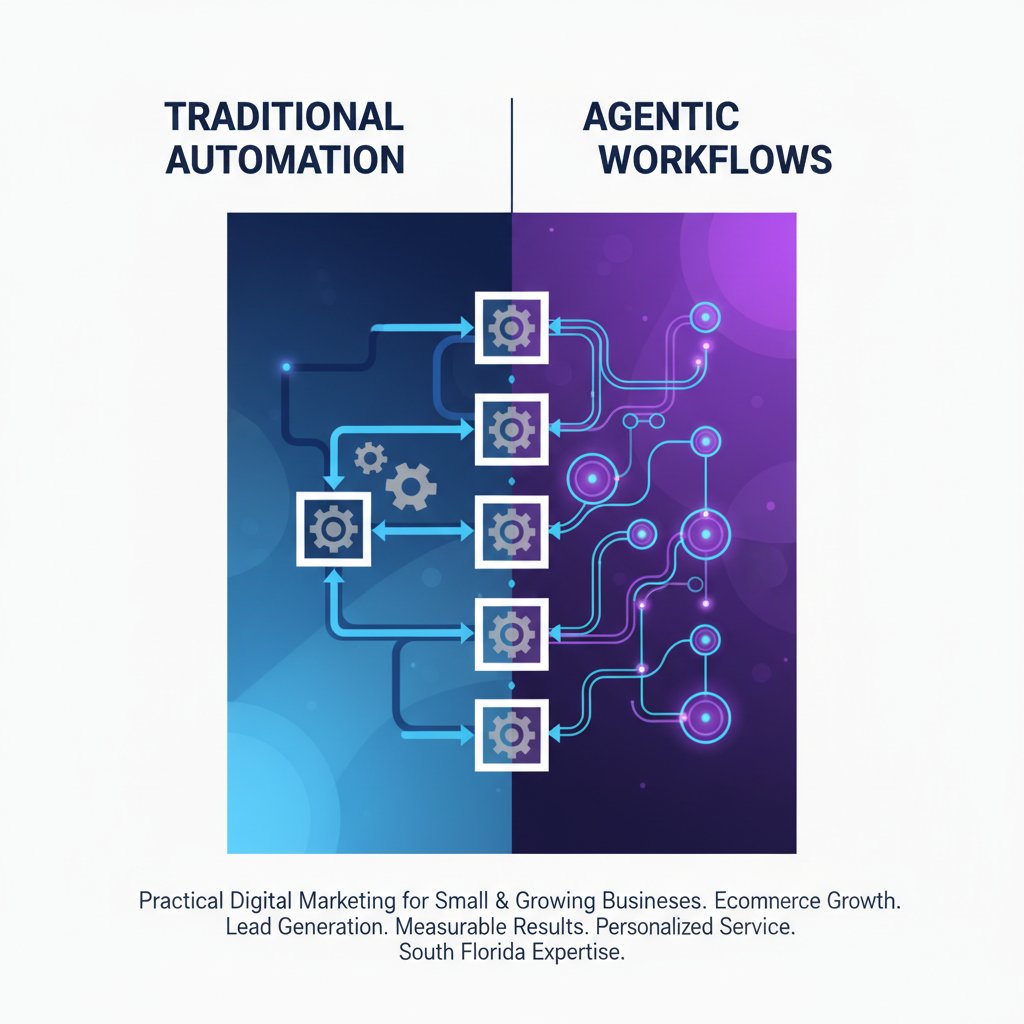
Agentic workflows represent the next evolution beyond basic automation. While traditional tools simply execute pre-programmed tasks, autonomous AI agents can make decisions, learn from results, and adjust strategies without constant human intervention.
Here’s what makes agentic automation different in 2026:
- Decision-making capability: AI agents analyze performance data and decide what content to create, when to post it, and which audience segments to target
- Continuous learning: These systems improve over time by studying what works for your specific audience
- Cross-platform coordination: Agents manage multiple social channels simultaneously while maintaining brand consistency
- Real-time responsiveness: They can engage with customers, answer common questions, and flag important interactions for human review
For South Florida businesses competing in crowded markets like Miami’s restaurant scene or Boca Raton’s retail sector, this technology levels the playing field against larger competitors with bigger marketing budgets.
How Agentic Workflows Transform Social Media Management
Content Creation and Curation
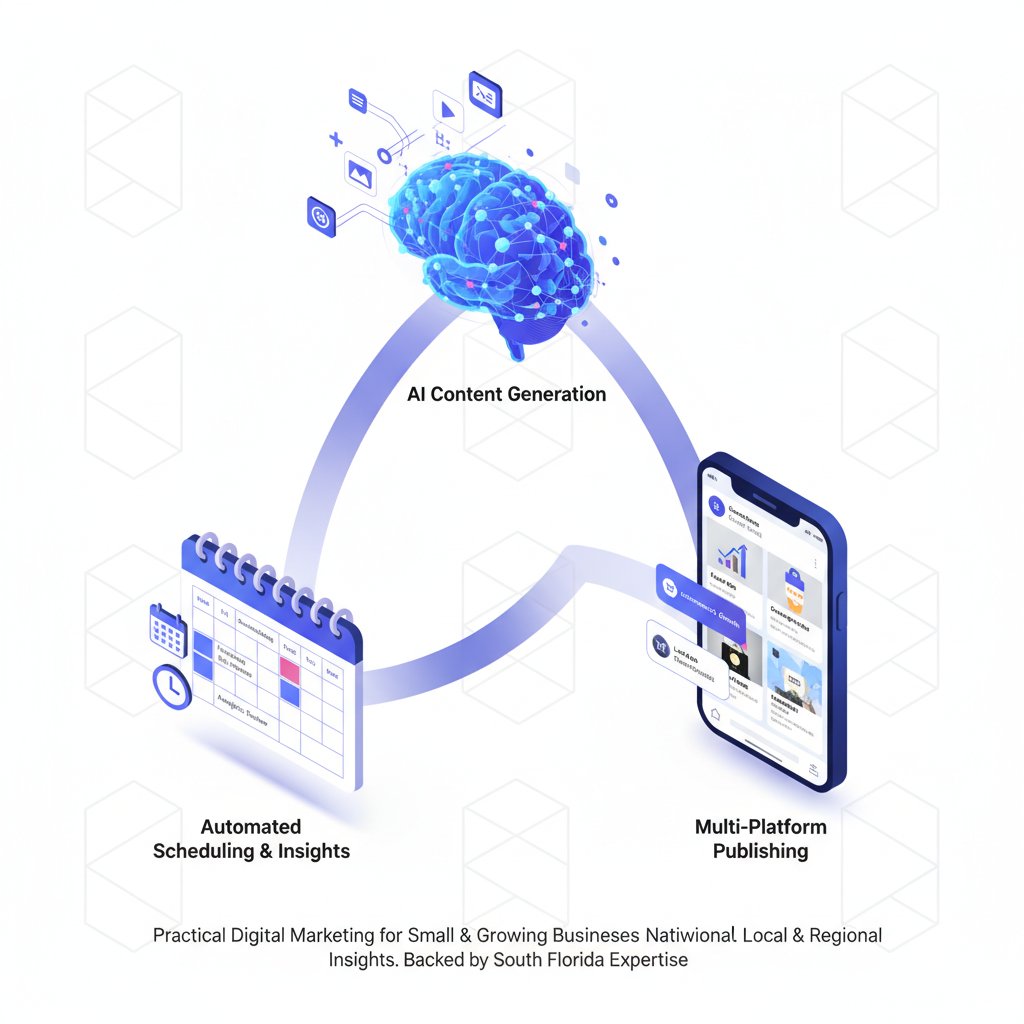
Modern ai agents don’t just schedule content you’ve already created—they can generate it. In 2026, sophisticated language models combined with brand-specific training create posts that sound authentically like your business.
A Fort Lauderdale-based boutique fitness studio we work with implemented agentic content creation in early 2026. Their AI agent analyzes trending fitness topics, monitors local events, and creates Instagram stories and posts that maintain the studio’s energetic, community-focused voice. The result? A 43% increase in engagement and 28% more class bookings, all while the owner reclaimed 8 hours per week previously spent on content creation.
The system works by:
- Learning your brand voice from existing content
- Monitoring industry trends and local conversations
- Generating post options aligned with your marketing goals
- Testing different approaches and learning which performs best
- Automatically scheduling optimized content across platforms
Intelligent Audience Engagement
Community management is time-consuming but crucial for building customer relationships. Agentic workflows excel here by handling routine interactions while flagging important conversations for personal attention.
For instagram marketing services, AI agents can:
- Respond to common questions about hours, pricing, or services
- Thank customers for positive comments and reviews
- Identify potential sales opportunities and notify your team immediately
- Detect negative sentiment and escalate issues before they become problems
- Engage with relevant local hashtags and conversations to increase visibility
A Miami-based home services company implemented this approach and saw their Instagram DM response time drop from 4 hours to under 10 minutes, resulting in a 35% increase in quote requests from social media inquiries.
Performance Optimization
Traditional social media management requires manually reviewing analytics and making strategic adjustments. Autonomous AI changes this completely by continuously optimizing performance without human intervention.
These systems analyze metrics like engagement rates, click-throughs, and conversions, then automatically adjust posting times, content formats, and targeting parameters. They run what amounts to hundreds of mini-experiments weekly, learning exactly what resonates with your specific audience.
Implementing Agentic Workflows for Facebook Ads Management
While organic social media is important, paid advertising is where agentic automation truly shines. Facebook ads management becomes dramatically more effective when AI agents handle the complex optimization work.
In 2026, sophisticated facebook ads management using agentic workflows includes:
Dynamic Budget Allocation
Rather than setting fixed budgets for each campaign, AI agents shift spending in real-time toward the best-performing ads and audiences. A West Palm Beach e-commerce store selling coastal home décor saw their return on ad spend increase from 3.2x to 5.7x within 60 days by letting autonomous AI manage their daily budget distribution across 15 different campaign variations.
Audience Discovery and Refinement
AI agents continuously test new audience segments, lookalike audiences, and interest combinations. They identify micro-segments that human marketers might never discover—like “South Florida residents interested in sustainable living who engage with home improvement content on weekends.”
Creative Testing at Scale
Agentic workflows can generate and test dozens of ad variations simultaneously, combining different headlines, images, calls-to-action, and body copy. The system learns which combinations perform best for different audience segments and automatically scales winners while retiring underperformers.
Setting Up Your First Agentic Workflow
Implementing agentic automation doesn’t require a complete overhaul of your social media marketing Florida strategy. Start with these practical steps:
Step 1: Define Clear Objectives
AI agents need specific goals to optimize toward. Rather than vague objectives like “increase engagement,” define measurable targets:
- Generate 50 qualified leads per month from Instagram
- Achieve 4% click-through rate on Facebook ads
- Reduce cost-per-acquisition by 25%
- Increase website traffic from social by 40%
Step 2: Choose the Right Platform
Several platforms offer agentic workflow capabilities in 2026, ranging from all-in-one solutions to specialized tools. Look for systems that integrate with your existing social media accounts and provide transparent reporting so you understand what the AI is doing and why.
Step 3: Train Your AI Agent
Feed your agent information about your brand voice, target audience, products or services, and marketing goals. The more context you provide initially, the faster it will learn and deliver results. Include examples of your best-performing content and clear guidelines about what topics or approaches to avoid.
Step 4: Set Guardrails
While autonomous AI is powerful, establish clear boundaries. Define approval requirements for certain content types, spending limits for ad campaigns, and escalation protocols for customer service interactions. This ensures the agent enhances your marketing without creating risk.
Step 5: Monitor and Refine
Even autonomous systems benefit from human oversight. Review performance weekly, provide feedback on what the AI is doing well and what needs adjustment, and gradually expand the agent’s autonomy as you build confidence in its decision-making.
Real Results: Agentic Workflows in Action
A Delray Beach-based jewelry designer implemented comprehensive agentic workflows in January 2026. Previously, she struggled to maintain consistent social media presence while managing her studio and client consultations. Within three months of implementing AI agents for content creation, community management, and Instagram advertising:
- Social media followers increased 127%
- Website traffic from social grew 210%
- Direct sales attributed to Instagram ads increased from $2,400 to $8,900 monthly
- Time spent on social media management decreased from 10 hours to 90 minutes weekly
The key to her success wasn’t just implementing the technology—it was choosing the right initial workflows to automate and maintaining human oversight for strategic decisions and personalized customer interactions.
Common Concerns About Agentic Automation
Will It Sound Robotic?
This was a legitimate concern with earlier AI tools, but 2026 technology has advanced considerably. When properly trained on your brand voice, AI-generated content is virtually indistinguishable from human-created posts. The key is providing good examples and clear brand guidelines during setup.
What About Authenticity?
Smart implementation uses AI agents for efficiency while keeping humans involved in genuinely personal interactions. Use automation for routine tasks like scheduling, initial responses to common questions, and performance optimization. Reserve human attention for meaningful customer conversations, creative strategy, and relationship building.
Is It Too Expensive for Small Businesses?
Pricing for agentic workflow platforms has become increasingly accessible in 2026. Many businesses find that the time savings alone justify the investment—reclaiming even 5 hours weekly is worth $200-500 for most business owners. When you factor in improved performance from AI optimization, the ROI typically becomes clear within 60-90 days.
The Future Is Agentic
Social media marketing continues to grow more complex, with algorithm changes, new platforms, and increasing competition for audience attention. Agentic workflows don’t just help you keep up—they give you a competitive advantage by executing sophisticated strategies that would be impossible to manage manually.
For South Florida businesses facing unique challenges like seasonal tourism fluctuations, multilingual audiences, and intense local competition, autonomous AI provides the agility and consistency needed to succeed.
The businesses thriving in 2026 aren’t necessarily those with the biggest marketing budgets—they’re the ones leveraging smart automation to work more efficiently and effectively than their competitors.
Ready to Transform Your Social Media Marketing?
Implementing agentic workflows might sound complex, but you don’t have to figure it out alone. At UltraWeb, we specialize in helping South Florida businesses leverage cutting-edge marketing technology without the overwhelm. Our team handles the technical setup, trains your AI agents with your unique brand voice, and provides ongoing optimization to ensure you’re getting real results—more leads, more sales, and more time to focus on what you do best.
Stop spending your evenings scheduling social posts and your weekends analyzing analytics. Let’s talk about how agentic automation can transform your social media marketing while you reclaim your time. Contact UltraWeb today for a free consultation and discover how autonomous AI can grow your business in ways you never thought possible.
Frequently Asked Questions
What exactly is an agentic workflow?
An agentic workflow is a marketing automation system powered by autonomous AI agents that can make decisions, learn from results, and adjust strategies independently. Unlike traditional automation that simply executes pre-programmed tasks, agentic workflows analyze data, test approaches, and optimize performance without constant human intervention.
How much does it cost to implement agentic automation for social media?
Costs vary depending on the platforms and complexity of workflows you need, but most small businesses can expect to invest $300-800 monthly for comprehensive agentic social media management tools. This typically includes content creation, scheduling, engagement management, and basic ad optimization. Professional implementation and management services add to this but often pay for themselves through improved results and time savings.
Can AI agents really create content that sounds like my brand?
Yes, when properly trained. Modern AI systems in 2026 can learn your brand voice by analyzing your existing content, style guides, and examples. The key is providing clear direction during setup and reviewing initial outputs to ensure quality. Most businesses find that AI-generated content becomes indistinguishable from human-created posts within 2-3 weeks of training and refinement.
Will agentic workflows work for B2B businesses or just B2C?
Agentic workflows are effective for both B2B and B2C companies. B2B businesses often see particularly strong results because AI agents excel at nurturing longer sales cycles, identifying decision-makers engaging with content, and maintaining consistent thought leadership presence. The strategies differ, but the underlying technology works equally well for both business models.
How do I maintain authenticity while using AI for social media?
The best approach is using AI agents for efficiency tasks while keeping humans involved in genuinely personal interactions. Let automation handle content scheduling, routine responses, performance optimization, and initial customer inquiries. Reserve your personal attention for meaningful conversations, strategic creative decisions, and relationship building with key customers and community members.
What social media platforms work with agentic automation?
Most major platforms including Facebook, Instagram, LinkedIn, Twitter/X, and TikTok are compatible with agentic workflow tools in 2026. The specific features available vary by platform based on their API capabilities, but comprehensive solutions can manage content, engagement, and advertising across all major networks from a unified system.